
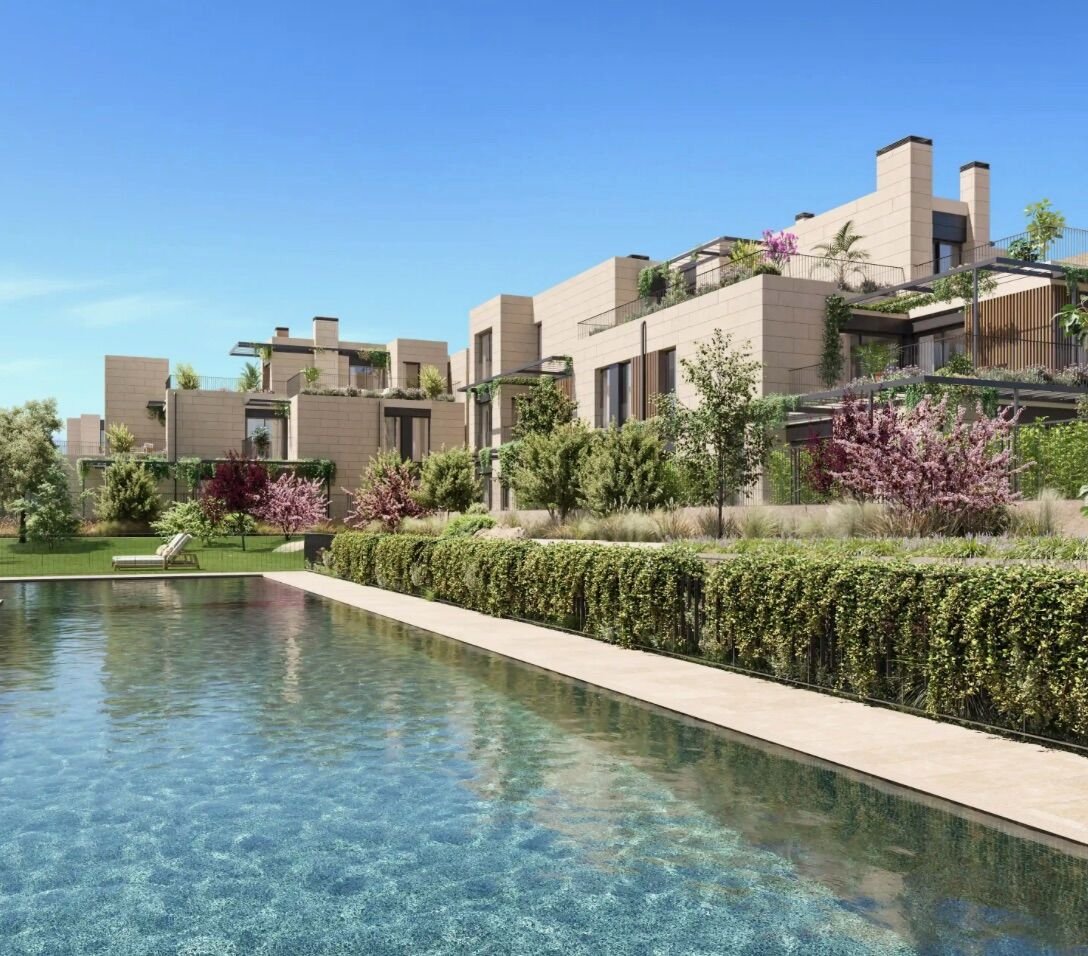
This is Xaz Natura Residencial in Spain, with beautiful communal gardens and pool.
We've been sold a story about luxury. That more privacy, more status, more convenience, are better.
But what if it's the opposite?
In my last post, I talked about pools and the environmental and economic case for shared amenities. But here's the part that most fascinates me: how design choices shape behavior and connection.
When everyone has their own pool, how much effort does it take to meet neighbors or make friends?
Private pools encourage exclusion. Don't like a neighbor? Don't invite them.
Think about the only child who needs playmates. The widowed neighbor who's lonely. The introvert who wants connection but finds it hard to initiate. The person who needs support during illness.
Shared resources make connection easier. You don't have to awkwardly "reach out." You just show up.
Communal resources teach patience, tolerance, understanding, adaptability. We learn from being around different people.
Design shapes behavior in ways we don't always recognize.
Private pool: Swim alone. Or don't swim at all because it was never really about the workout.
Communal pool: More likely to swim with an encouraging friend. Bump into neighbors. Have spontaneous conversations. Make unexpected friends. Stay more active.
Let’s reframe our choices. It's not about what we give up or sacrifice. It's about what we gain.
A better pool that is larger, heated, natural, professionally maintained. More land for gardens, quiet spaces, play areas, healthier ecosystems. Easier, more organic connections, healthier people physically and emotionally.
Greater amenities. Lower costs and environmental impact.
When we know the behaviors that support wellbeing — connection, learning, health, time in nature — we can design for them from the start.
We keep privacy in our homes. Connection happens in spaces designed for collective benefit.
And this principle extends everywhere:
🌻 Communal kitchens: cooking classes, diverse cuisines, quality time to enjoy meals instead of always cooking, built-in social network.
🌻 Shared workshops: learn new skills, collaborate, create, access tools too expensive to own individually.
🌻 Community gardens: connect to seasonal rhythms, grow food, meditation, natural gathering points, learning, increased biodiversity.
This isn't about eliminating privacy or choice. It's about creating a system in balance.
Private homes for individual needs. Shared amenities for collective benefit. Not taking more than we need. Not harming one part of the system for another's benefit.
It requires creative solutions, not what's easiest or cheapest to meet not single, short-term metrics. It's designing a whole system, long-term.
How do you feel about the balance between private and communal spaces today?
First published on Linkedin