
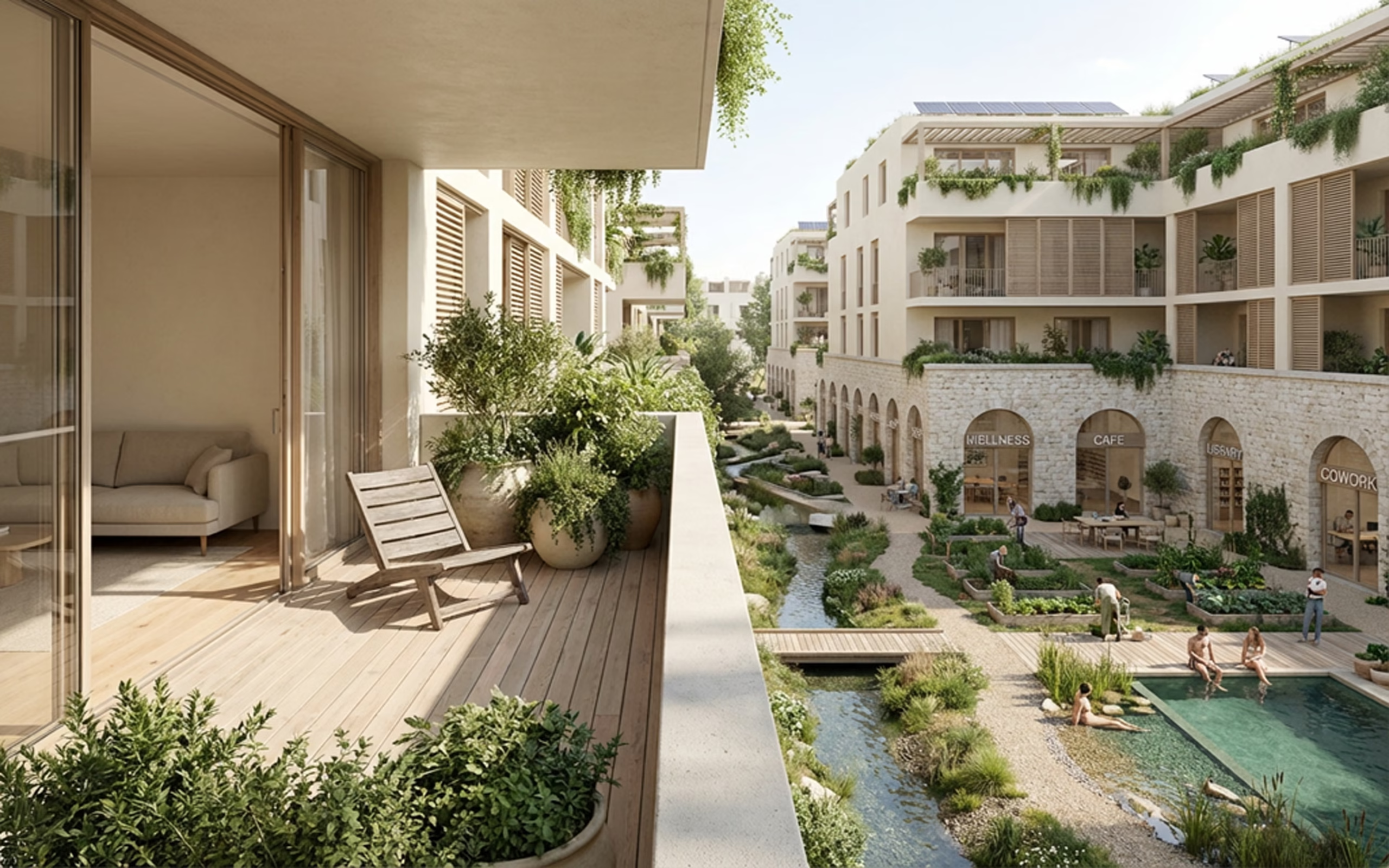
Reimagining Our Homes and Communities
Why everything is interconnected, and why partial solutions aren't enough
When I moved into my New York apartment a few years ago, I needed to renovate. Nothing crazy — but needed to reconfigure some spaces for my three teenage kids. Unfortunately, collaboration and problem solving is not what building boards and management are built for. Instead, they’re built to protect.
What should have been an exciting fresh start among new neighbors became months of frustrating paperwork, waiting and unnecessary costs. Not because anyone was malicious, but because the board protected policy (and their unpaid time), management protected liability, and contractors protected their margins. Nobody sat at the same table looking for solutions together. The result is always increased costs -time, relationships, money, resources-, and a lack of agency by those who have no seat at the table.
Once we had moved in, I was surprised by another curious reality. In spite of our building having hundreds of residents and some lovely common areas, most of us barely know each other, even now years later. We pass each other in the lobby, the mail room, or elevator, and nod politely because we don’t know most of our names. The isolation is real, palpable, even though the building even throws a holiday party once a year in the lobby. But none of this is enough to bring people closer together. Not because we don’t want to connect, but because the building or its systems weren’t designed for community.
I had offered to create a simple opt-in directory so we could post a photo with our names. A platform to connect in regular, everyday ways: to ask for recommendations, offer items we don’t need, find a pet or baby sitter. This is how relationships build over time and how real, long-lasting community is created. Sadly, and in spite of the known positive impacts that community and connection have on our health, the board said no due to privacy concerns. And yet, they have no problem approving the use of toxic materials in renovations, like a wood lacquer so powerful it can be smelled and inhaled five floors below. It’s not illegal, so it gets approved, in spite of the impact it will have not just on the inhabitants of that home, but the other building’s residents.
And it’s not just the issues with my building. How many times have I stopped at the supermarket, thinking about the plastic packaging and non-seasonal produce shipped from three continents. My main interaction is with the self-checkout screen. Most of us have no idea where any of this food is actually grown, or by whom, or whether it’s doing our bodies or the producers any good.
It isn’t one thing that bothers me. It’s all of it, at once. The wasted opportunities. The isolation. The food disconnected from the land. A building that was never designed for connection or improvement. And each broken piece making the others worse. But this isn’t just a New York issue. It’s global and systemic. And when issues are this complex, we tend to simplify and revert to protecting ourselves and our silos; to feel safe.
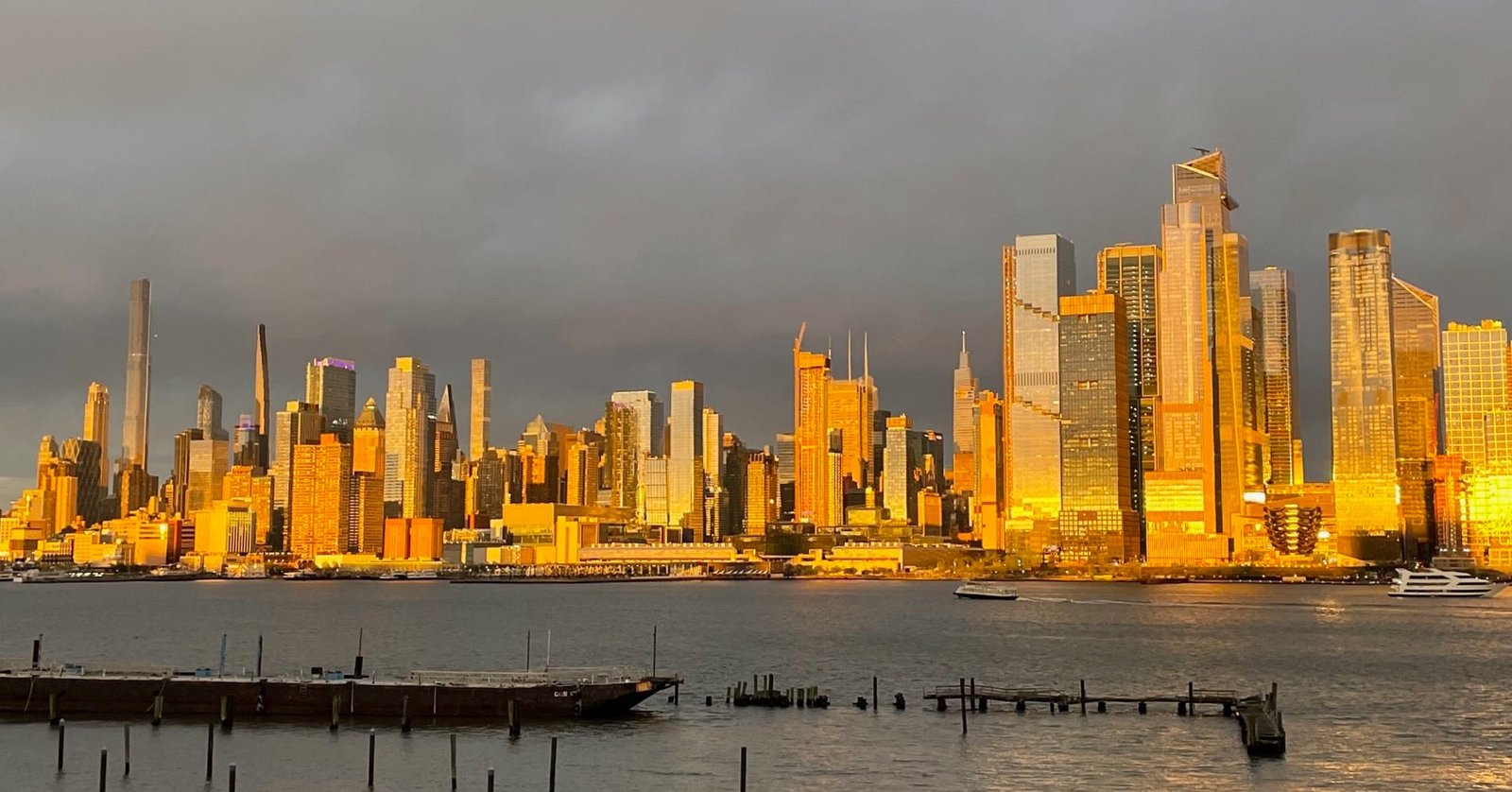
Stunning sunset reflected on the buildings of NYC (photo taken from NJ by my friend M Booth)
The contrast only becomes greater when I land in Mallorca, where I was born and where I now spend half my time. I open the car windows on the drive home. The smell of the sea, the earth, the trees and plants along the road. Everything slows down. My shoulders drop before I reach the first roundabout.

A stone home in Banyalbufar, Mallorca
I drive through a village. Old stone buildings built with materials from land nearby and techniques passed down through generations of craftsmen who grew up here. A market where vendors know their customers by name. Strangers who still say hello when they pass by on the street. Architecture that breathes because it was designed for this specific climate and this specific place. Mallorca is not perfect but offers great examples of how different pieces can work together instead of against each other.
This contrast is where Alluma started. Not with a business plan or a building standard. But with the growing conviction that our homes and communities can be regenerative and part of a single, interconnected system, instead of one that is broken in almost every direction at once.
The Systemic Crisis
By now it’s well understood that buildings and construction account for nearly 40% of global greenhouse gas emissions. Residential buildings make up almost half of that. The homes we live in are literally warming the planet.
But that’s just one layer. Pull the thread and everything else starts to unravel.
-
Our planet’s natural resources are being so polluted and depleted that we have now overshot six of the nine ecological boundaries (as seen in Doughnut Economics 3.0). Up until now the main focus of healthy housing construction has been to reduce carbon in the built environment as a way of mitigating climate change -just one of the nine boundaries. But it’s not shocking to see how housing also impacts the other eight ecological boundaries (biodiversity, pollution, fresh water…), as well as the twelve social foundations (food, health, education, equity…). By addressing only one issue at a time we’re failing to see the bigger picture and the creative solutions that can come from addressing the whole system.
-
The materials inside our walls (the paints, adhesives, insulation, flooring, and more) contain toxic chemicals, endocrine disruptors, microplastics, volatile organic compounds. In our modern world, we now spend most of our lives indoors than out. Cancer rates, asthma, depression, autoimmune disorders are the invisible costs of our unhealthy indoor air that never show up on a developer’s balance sheet. Instead those costs show up in our bodies and our healthcare system every day.
-
Our food systems have industrialized to the point where most people have no connection to what we eat, where it was grown, how it was produced, and what it’s doing to our health or the planet. The link between what we eat, where we live and how we feel has been severed so gradually that most of us don’t even notice it’s gone.
-
Democratic governance is struggling. People feel they have no real say in how their day-to-day lives and communities are shaped. Decisions are made top-down, reversed every election cycle, and rarely designed with a long-enough timeframe. Agency (the feeling that our voice matters and that our participation changes something) is disappearing.
-
Housing is insufficient and unaffordable in almost every major market. The people who need homes the most are priced out or get stuck living in unhealthy homes and neighborhoods. The homes that do get built serve investors and developers and their need for short-term returns, not the people who live in them.
-
And underneath all of it: isolation, for all ages. An aging population with shrinking social circles and lack of wellness amenities. Young people who’ve never spoken to their neighbors. A loneliness epidemic that we’re only beginning to understand the cost of emotionally and physically. Loneliness is now considered as damaging to health as smoking 15 cigarettes a day.
These aren’t separate crises. They overlap, reinforce each other, and share common root causes. Everything is connected:
-
The toxic materials that harm our health also harm the planet.
-
The isolation that damages our wellbeing also weakens our communities.
-
The short-term thinking that drives development also degrades democracy.
That’s what makes this a systemic crisis, and that’s why solving any one of these problems in isolation, which is what we’ve been doing, doesn’t work. When we talk about regenerative communities, we’re talking about designing and building homes and communities that address all the issues long term -the ecological boundaries and the social foundations- to help regenerate the whole system.

Pastanaga Borda aka Queen Anne’s Lace or Wild Carrot (daucus carota majoricus). A drought-resistant, self-sufficient, low-maintenance Mallorcan plant.
Why Current Models Fall Short
It’s not like nobody has tried. There are dozens of models for living differently, and many of them get important things right. But they each solve for one or two variables while ignoring the rest.
-
Most homes today provide shelter, privacy, and comfort. Some provide only the minimum while others are luxurious. Some are apartments, others are houses. Homes can be in cities, suburbs or rural areas. But what they mainly have in common is that each one is built as an independent unit, with limited or no shared resources or spaces designed for connection. They solve for the needs of the owner or developer and ignore the system.
-
Co-housing gets the community piece right: shared spaces, collective decision-making, and intentional design for connection. But many are geared to serving targeted or niche populations, with specific needs, and are not always designed around people’s diverse strengths and abilities.
-
Co-living solves affordability for younger, more mobile professionals. But by design, these homes are transient (somewhere between college dorms and extended-stay hotels). Connection stays shallow because turnover is constant. You never quite settle in.
-
Affordable housing, most often developed by housing authorities to provide basic, affordable housing, for those most in need. They tend to be built in the cheapest areas, with the cheapest materials and fastest timelines, worst air quality, most toxic materials, and with the least effort spent on design of spaces that create connection and wellbeing. All resulting in dwellings that often resemble prisons more than homes.
-
Senior housing addresses aging but isolates older people from the rest of society. The model assumes seniors need to be separated rather than integrated. The result can be a feeling of invisibility and lack of meaning, which impacts health and wellbeing. And what happens to these elders’ accumulated wisdom and experience? Most often, it just gets lost. A lost opportunity for both the older and younger generations.
-
Gated, branded, and luxury developments offer security, modern comforts and amenities, but they’re exclusionary by nature. They tend to be homogenous and designed to keep people out rather than bring people together.
In all the above, the sustainability and environmental standards are typically whatever the market will bear, often unaddressed altogether, or driven by a focus on image and marketing, more than real conviction or understanding.
-
Eco-villages often take the environmental piece seriously and build strong community values. But they usually require significant lifestyle sacrifice — geographic isolation, limited modern comforts, governance structures that can feel heavy or ideological. They appeal to a committed few, and are difficult to replicate at scale.
-
Kibbutzim and communes pioneered shared resources and collective living decades ago. The models that survived did so by becoming more conventional over time, including privatizing housing and reducing collective obligations. The ones that didn’t adapt collapsed under the weight of forced participation, a lack of space for individuality, and unsustainable expectations.
-
Sustainable rental developments are being developed now as a new housing typology that focuses on sustainability in a more meaningful way. Some also incorporate quite a few shared amenities to help with cost and waste reduction as well as community building and resilience. These are better than many other options, but they can also feel prescriptive and impersonal. Not a surprise given they are developer-led and still focus on profitability for the developer, not the long-term wellbeing and agency of residents and other stakeholders. Most rental models unfortunately fall into this trap, with residents less motivated to commit time and effort to a home and community that ultimately still feels temporary.
The list goes on, and the pattern is consistent. The sustainable building that is offered as a rental feels temporary, so community care and commitment flounders long term. The connected community is niche and requires too much sacrifice for most. The affordable housing is unhealthy. The beautiful development is exclusionary. Everyone is solving their piece of the puzzle while ignoring the big picture on the box.
So what would it look like to design for the whole system?
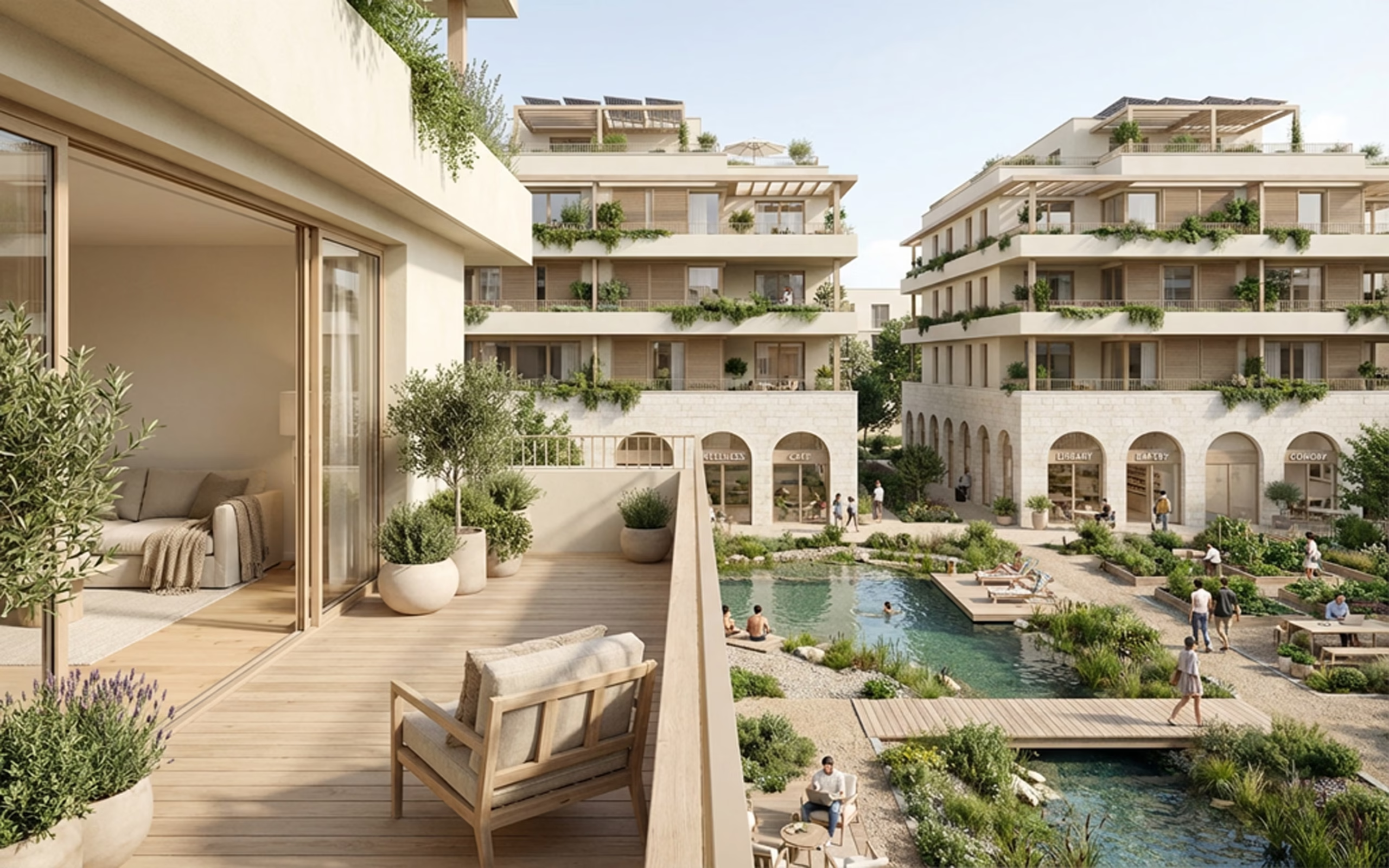
Alluma Regenerative Communities - Reimagining our homes and communities. Challenging the status quo!
What If We Designed Differently?
What if instead of solving one crisis at a time, we designed homes and communities that addressed all of them simultaneously? By understanding that they’re interconnected, and that solving them together is actually more effective in the long-term and produces greater wellbeing for people, communities and planet.
That’s the premise behind Alluma.
Starting with the homes themselves that are beautiful, healthy, and right-sized private spaces. They’re thoughtfully designed for individuality, health, and recharge. Meaning what we need privately is exactly what’s in our home. Nothing more, nothing less.
Then pair those homes with extraordinary shared amenities that would be impossible for most of us to afford individually:
-
Communal kitchen, dining, and living rooms that become places to gather.
-
Varied fitness spaces to keep us active and healthy (gym, natural pool, play areas).
-
Creative studios that stimulate our minds with activities that help us learn, be curious and open-minded, and which connect us.
-
Organic and regenerative vegetable, fruit, and flower gardens, and biophilic strategies that help connect us to nature.
-
A co-working, business and learning center and library.
-
A shared fleet of electric vehicles.
-
A laundry café that’s actually pleasant to spend time in.
-
And so much more.
All of these spaces are designed to naturally bring people together — not because someone organized an event, but because we’re both doing laundry, swimming, creating, eating, or playing with neighbors and friends.
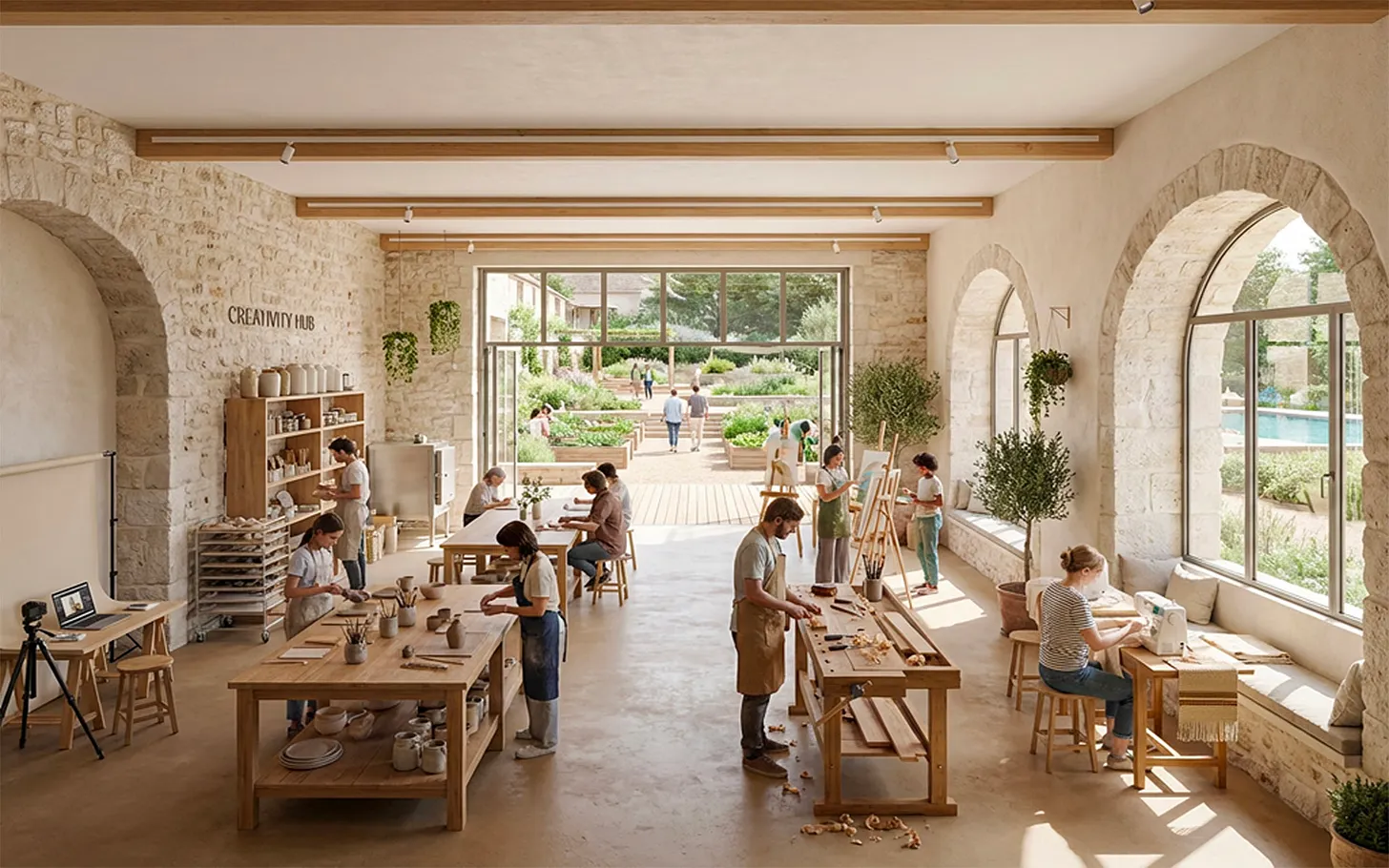
Alluma - Creative Spaces
And the community is built to the Living Building Challenge — the world’s most rigorous green building standard. That means net-positive energy; non-toxic, local, recycled, reusable materials; increased biodiversity; water systems that work within the natural balance of the land; and buildings that are resilient, are built to last for centuries, and give back more than they take.
Then there’s what holds it all together: the structure, governance and technology that give residents real agency. Steward ownership that ensures the long-term purpose is the wellbeing of people and planet, not short-term profits. Community decision-making based on sociocracy ideals — where every voice matters, and where participation is meaningful. An optional community jobs marketplace that offers residents the ability to contribute in the care of the community with their choice of time, skills or capital. And where technology enhances communication and efficiency without replacing human connection.
Alluma’s four foundations build to create a single system, and they only work because they’re interconnected:
-
Community and connection — how we live together.
-
Health and wellbeing — how our homes affect our bodies and minds.
-
Regenerative buildings — how we build homes that heal us and our planet.
-
Systems and technology for good — how we govern, communicate, and operate.
Each one strengthens the others. Shared amenities reduce the environmental footprint — smaller private homes, fewer duplicated resources — while creating natural connection points. Healthy materials and building technology improve both human health and planetary health. Governance and equitable decision-making that gives people genuine agency and builds the commitment that makes community last and improve. Technology that enhances good governance systems and also frees up time for the things that actually matter.
Pull one foundation out, and the system weakens. Design them together, and they compound.
Where This Goes From Here
This is what we’re building.
Alluma is more than a community in Mallorca. It’s a proof of concept that all of these pieces can work together as a single, interconnected system for the wellbeing of people and the planet. An example that we don’t have to keep solving one crisis while negatively impacting or avoiding the others.
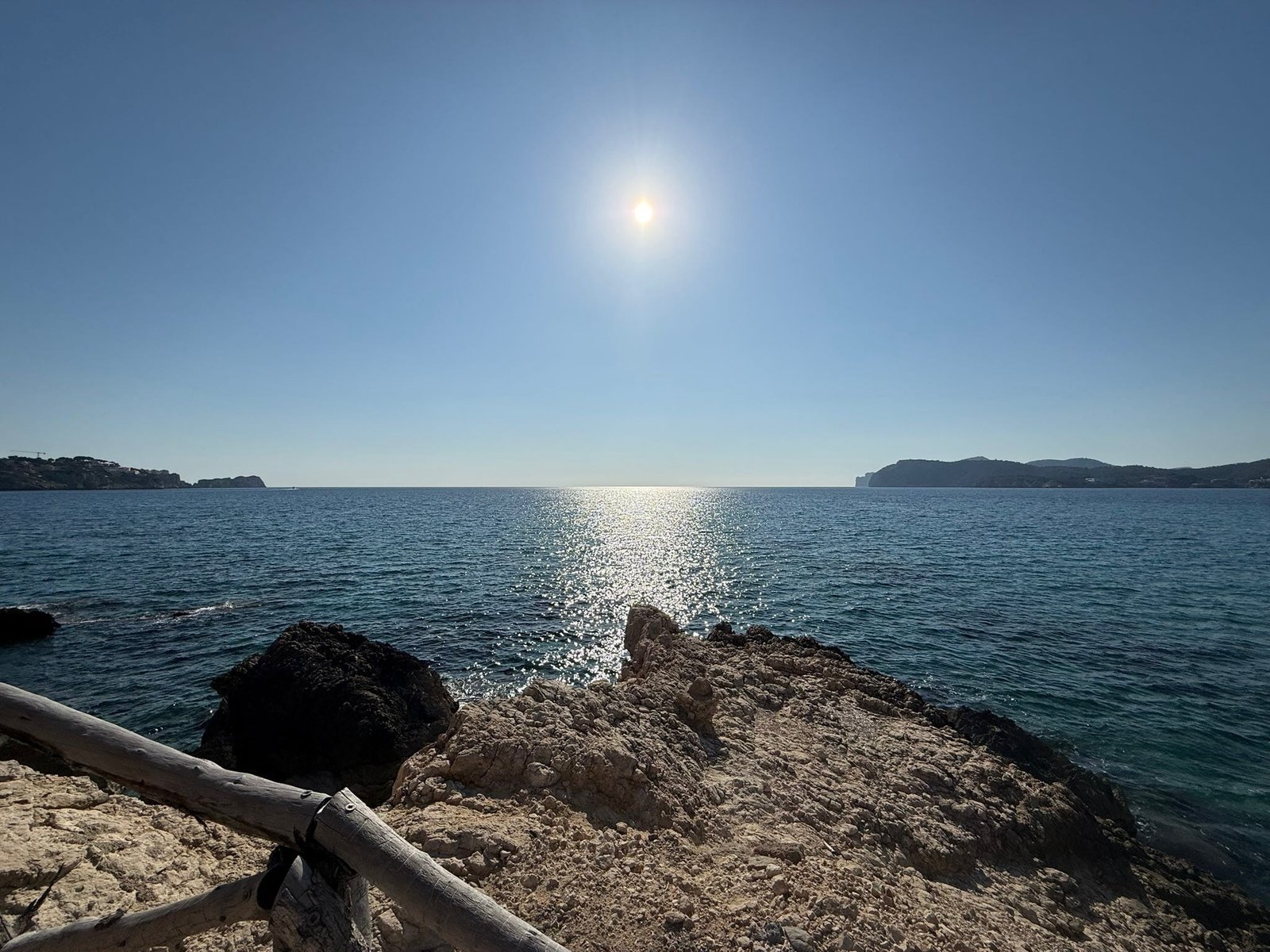
Some places remind us of what is possible.
But designing and building better homes and communities is only half the challenge. The other half is redesigning the business of building them because the current siloed system of developers, banks, architects, contractors, government, and others is part of what got us here. Next time, we’ll make the case for a radically different business model: an Alliance of Partners where every stakeholder has a seat at the table from day one.
If this resonates, subscribe so you don’t miss it.
More soon.
— Samantha
Founder & Practical Dreamer of Alluma