
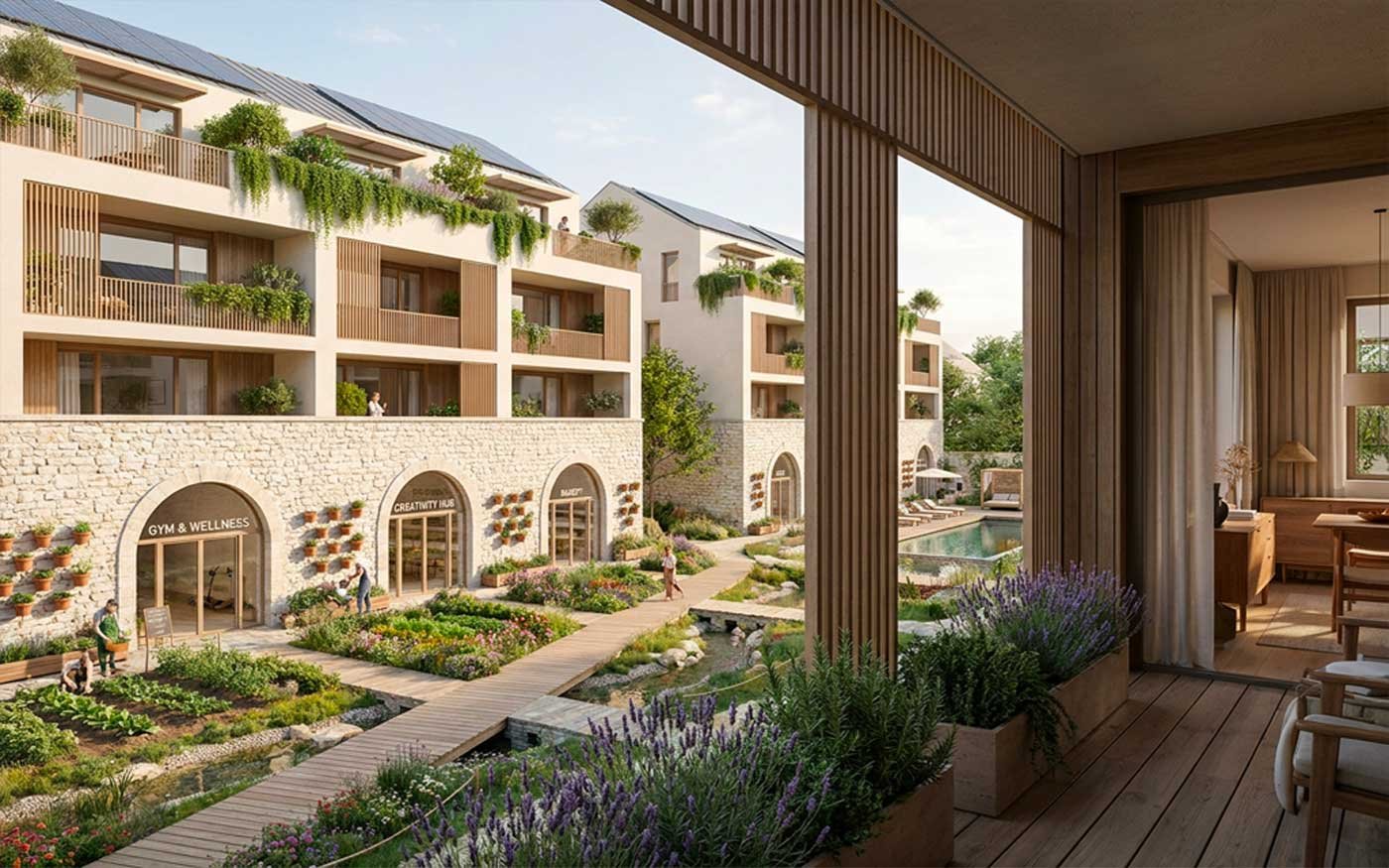
What It Looks Like When a Building Gives Back
What regenerative building actually means and why "less bad" isn't enough
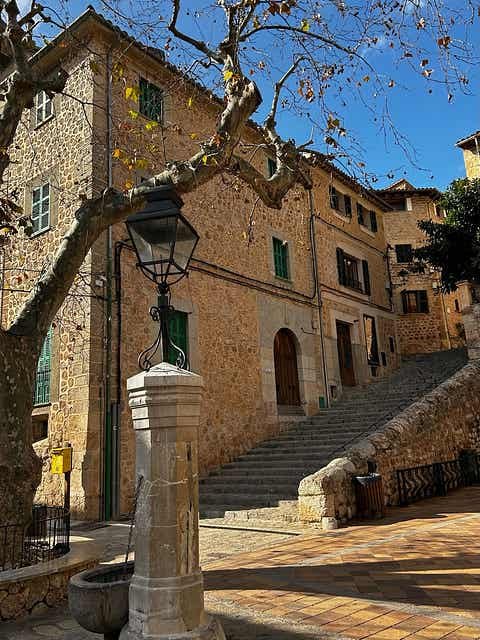
Some of the most sustainable buildings I’ve ever seen are hundreds of years old, including many of those in the village of Fornalutx, up in the Tramontana mountains of Mallorca, a UNESCO World Heritage Site.
Their stone walls thick enough to regulate temperature. Built with local materials, from this land, for this climate, and for the people who live here. Inner courtyards and patios that provide shade and protection. Spaces oriented to naturally take advantage of the sun and the breezes.
But even when we’re not aware of all that these buildings are doing, what is inescapable is how they make us feel. Different than anything a modern home can convey, no matter how beautifully designed. These homes feel deeply connected to their place and emanate a sense of calm, beauty, and endurance. These homes may not speak but they transmit without words that they’re here to protect us and our surroundings and that they’re here to stay, long-term.
They’re not perfect, of course. Small windows and dark interiors, which made sense for a time when modern technologies didn’t exist and people spent most of their lives outdoors. Fireplaces that kept people warm in winter weren’t good for anyone’s lungs. There were no controls for temperature or humidity. Water was drawn by hand from a well, and bathrooms, well, let’s not even go there.
But we’re not trying to go back in time at Alluma and the regenerative communities we’re building. We’re trying to take what designers and builders understood intuitively centuries ago, like belonging to a place, working with a climate, and building something to last. And bringing those concepts forward with everything we now know, including designing for the climate our buildings will face in the next century.
As advanced as our technologies are today, it’s easy to get caught up in the new and shiny at the expense of historic, deep wisdom about how elements within a system are connected and how they all work together to sustain and regenerate the whole.
This last foundation, Regenerative Buildings, is our response to how we balance the best of what modern technology allows us to do with what our past teaches us about how regenerative systems work.
Community vs. “community”
The first three essays in this series explored what it takes to build a community that genuinely works: how we design for community and connection, which systems and technology can use to help us communicate, operate and govern, and how we can design spaces that enhance our health and wellbeing. But all of that rests on something just as fundamental. Because we can get the community right, the governance right, the health and wellbeing right, and still build the buildings themselves in a way that undermines the good we design into the other areas.
Regenerative Buildings, our last foundation, closes that loop and makes the other three possible, long-term. This is what this last essay in the series is all about.
What regenerative actually means
Most conversations about sustainable buildings start with doing less harm: less carbon, less energy, less waste, and less damage. Those things are important, and sustainable building standards, like LEED, WELL, BREEAM, and many others, are moving the industry in the right direction and deserve much credit.
But the 400-year-old buildings in Fornalutx aren’t trying to be less bad. They’re not optimizing against a standard or hitting a benchmark. They were just built for the place because that was the only way they could be built. Specific for their particular climate, the people, and the land they’re a part of. And four centuries later, they’re still standing, still serving their purpose of making the whole system (the land, the biodiversity, the communities, the people) more resilient and capable of supporting life.
That’s the difference between sustainable and regenerative. Sustainable buildings ask: how do we do less harm? Regenerative buildings ask something harder: how do we consider the whole ecosystem and give back more than we take? To the land the building sits on. To the air around it. To the people who live inside it. To the nature and communities it impacts.
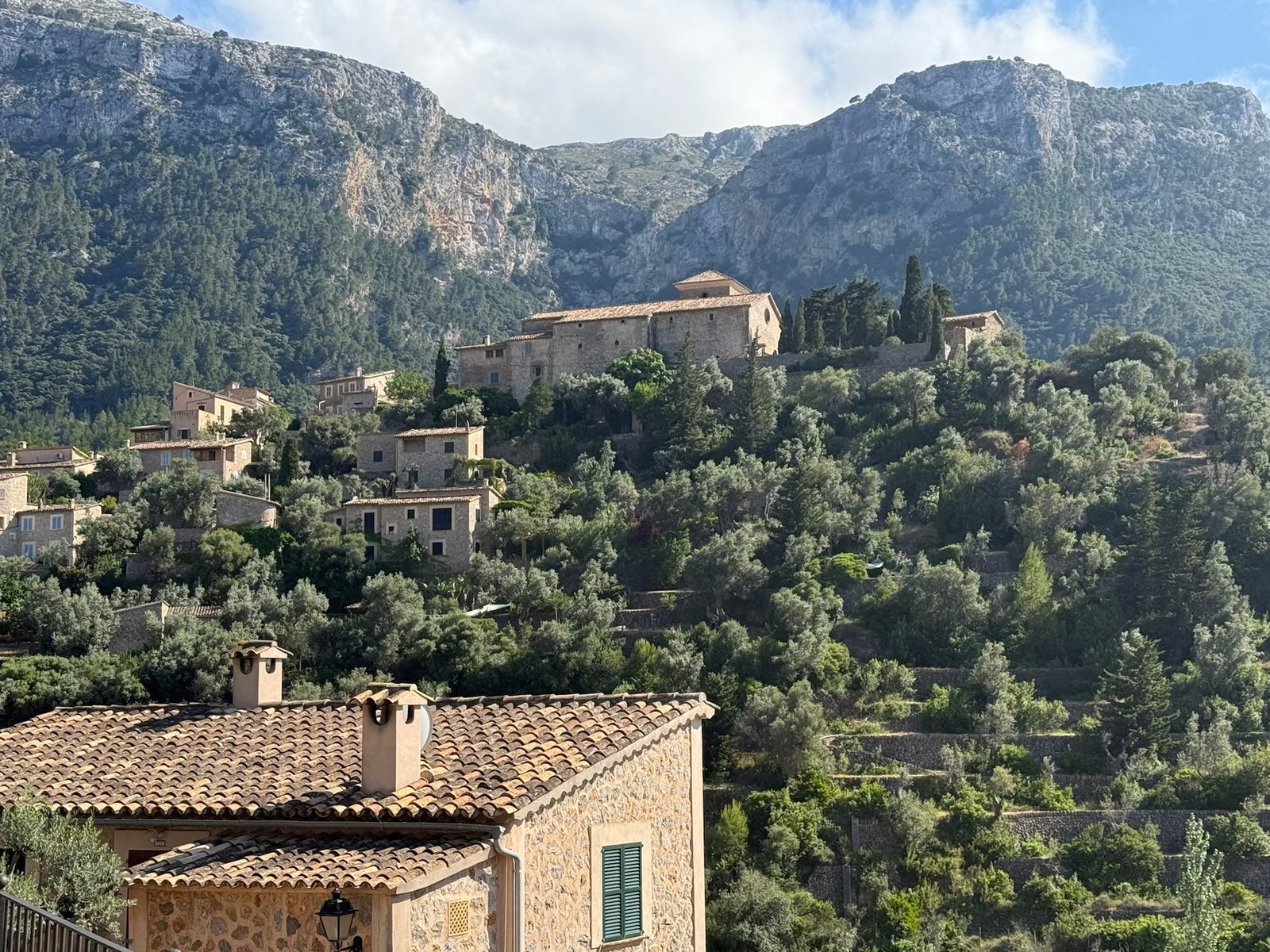
Village of Deiá, Mallorca - June 2026
Regenerative has to mean the long-term health of the whole system or it doesn’t mean enough. This is where systems thinking becomes essential. We can’t be regenerative in one area, while causing harm in another.
The moment we solve for energy but ignore material toxicity, or fix our carbon footprint but ignore our supply chain, or add low-flow water fixtures but don’t harvest rainwater, we’ve missed the point. Everything is connected.
A building that truly gives back has to account for all of it: the resilience to last centuries rather than decades, the equity embedded in every supply chain decision, the nature that our land and bodies need, and the community of people whose lives the building either supports or undermines.
That’s what regenerative means at Alluma. It’s a higher bar than most buildings ever achieve, but it’s what we need in order to solve our systemic crisis.
Why we chose the Living Building Challenge
When we started thinking about how to build Alluma, we knew we’d need the support and guidance of one or several sustainable building standards, not for the certificate one achieves at the end of the process, but because we were truly looking for the best know-how on how to build things better. We considered many options, each with real merit and meaningful track records.
But they all, in different ways, were still asking the same underlying question: how do we do less damage?
Then, quite by chance, someone asked if I’d heard of the Living Building Challenge (LBC), and I knew we’d found what we were looking for. Part of the International Living Future Institute (ILFI), the LBC asks something quite different: what would it look like for a building to give back more than it takes?
Created originally 20 years ago by architect Jason McLennan, the LBC program is outcome-focused (and only certifies based on actual performance), rather than prescriptive. It also tells us what we need to achieve at the end, not the exact path of how to get there. That demands more from the designer, the builder, the developer, and the whole team, but it also means it’s inherently more flexible. It can be harder, slower, and more expensive in the short term, but it ultimately produces something categorically different from anything the other standards are asking for.
Our logic was that if we’re building something new from the ground up, at a moment when the technology, know-how and economics finally make this higher standard achievable, why start from less bad?
The Living Building Challenge, one of the programs of the International Living Future Institute.
The timing matters more than it might seem. Twenty years ago, building to the Living Building Challenge wasn’t really feasible at scale. The materials weren’t easily available. The costs were prohibitive for most. The technical know-how was still being developed. A lot has happened in the two decades since. The materials science and industry have greatly caught up, thanks in large part to herculean efforts of many to create awareness and bring the industry together. The costs have come down. The expertise is much more accessible. The moment is right in a way it wasn’t before. And even if it’s still an incredible challenge, this opportunity is also a responsibility to improve how and what we build. To move away from functioning in silos with short-term goals, and towards an ecosystem that is self-sustaining, life-affirming, interconnected, and long-term focused.
The urgency has shifted too. The systemic crises the globe is facing, like climate change, health, isolation, democracy, biodiversity, inequality, and more, are urging us to find better solutions faster. Addressing each crisis independently is not only too slow, it ignores the fact that they’re all interrelated.
Regenerative design, and projects like Alluma, have to account not only for today’s climate, but the environment those buildings will face in 100 years. Not only for how these buildings will impact our health and wellbeing today, but how they will continue to impact us and the world around us in the future. And not only for how our societies function today, but how we want and hope our societies will function for future generations.
Ultimately, a standard this ambitious has an inherent DNA that prioritizes adaptability, so that the buildings built under its guidance can evolve and continue to be ambitious over time. This is also part of Alluma’s DNA.
What the Living Building Challenge actually requires
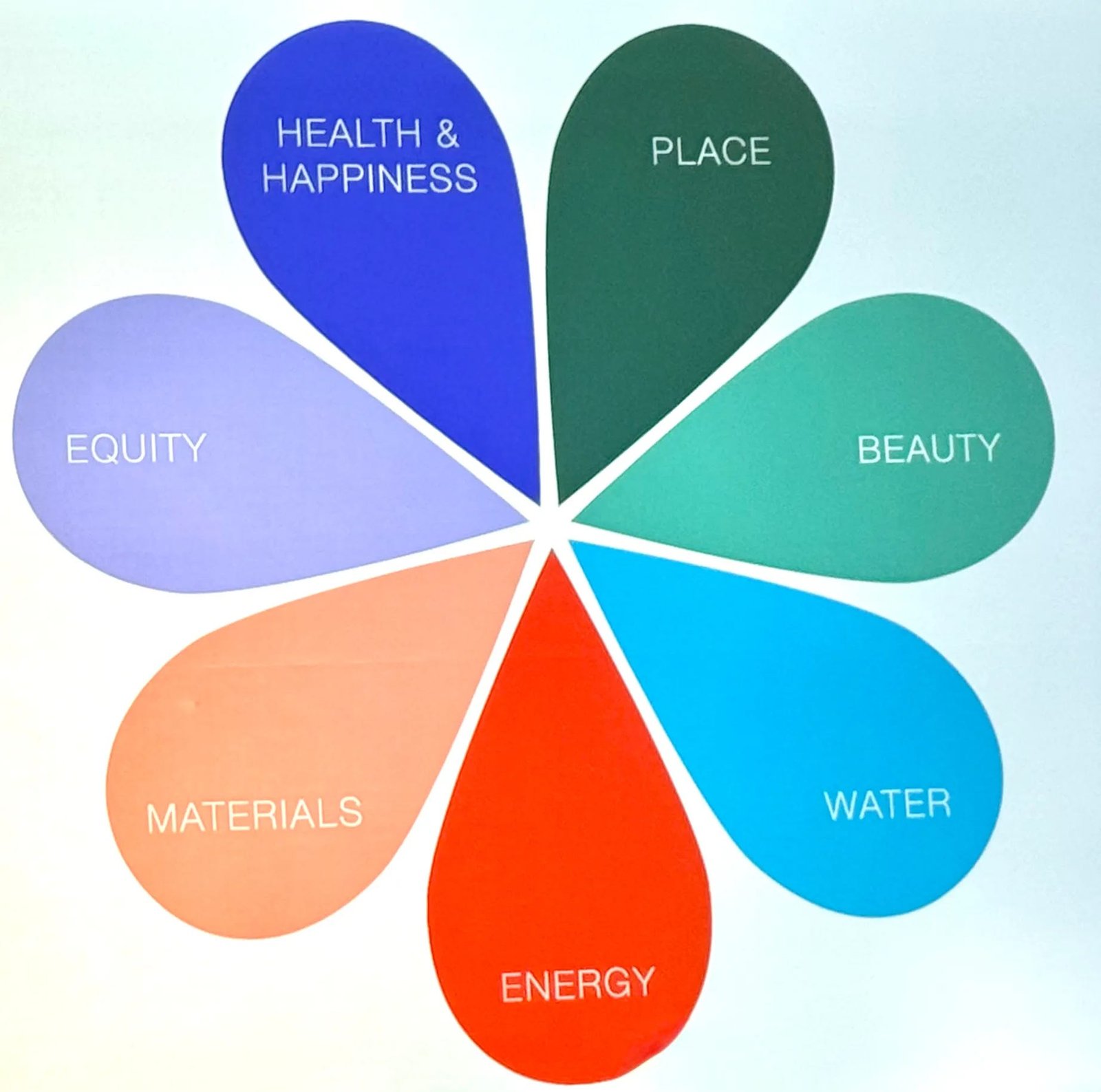
The seven petals of the Living Building Challenge
The LBC is organized around seven petals: place, beauty, water, energy, materials, equity, and health and happiness. The details and mechanics are well documented, so other than a few examples, what I want to convey in this essay is the spirit of what it asks.
The LBC asks that a building belong to the place it’s built in, not dropped in from a catalogue, but designed for the climate, the land, and the people it impacts, now and in the future.
It asks that energy and water systems give back more than they take. Mallorca’s 300 days of sunshine a year is an asset not every location can count on, and one we should easily be able to take advantage of, together with many other energy-saving strategies.
The water petal, however, on an island where rainfall can be non-existent for long stretches and potable water sources limited, will be a major challenge and require much creativity to solve, if it even can today in this location. But a regenerative building doesn’t retreat from hard questions, it faces them head-on, and adapts as best as it can. It’s exhilarating to look at how some of these issues have been solved in the past (like some of the incredible underground Mallorcan cisterns, aljibes or aljubs, that were built to capture and store water) and how they might be adapted to work with updated technologies.
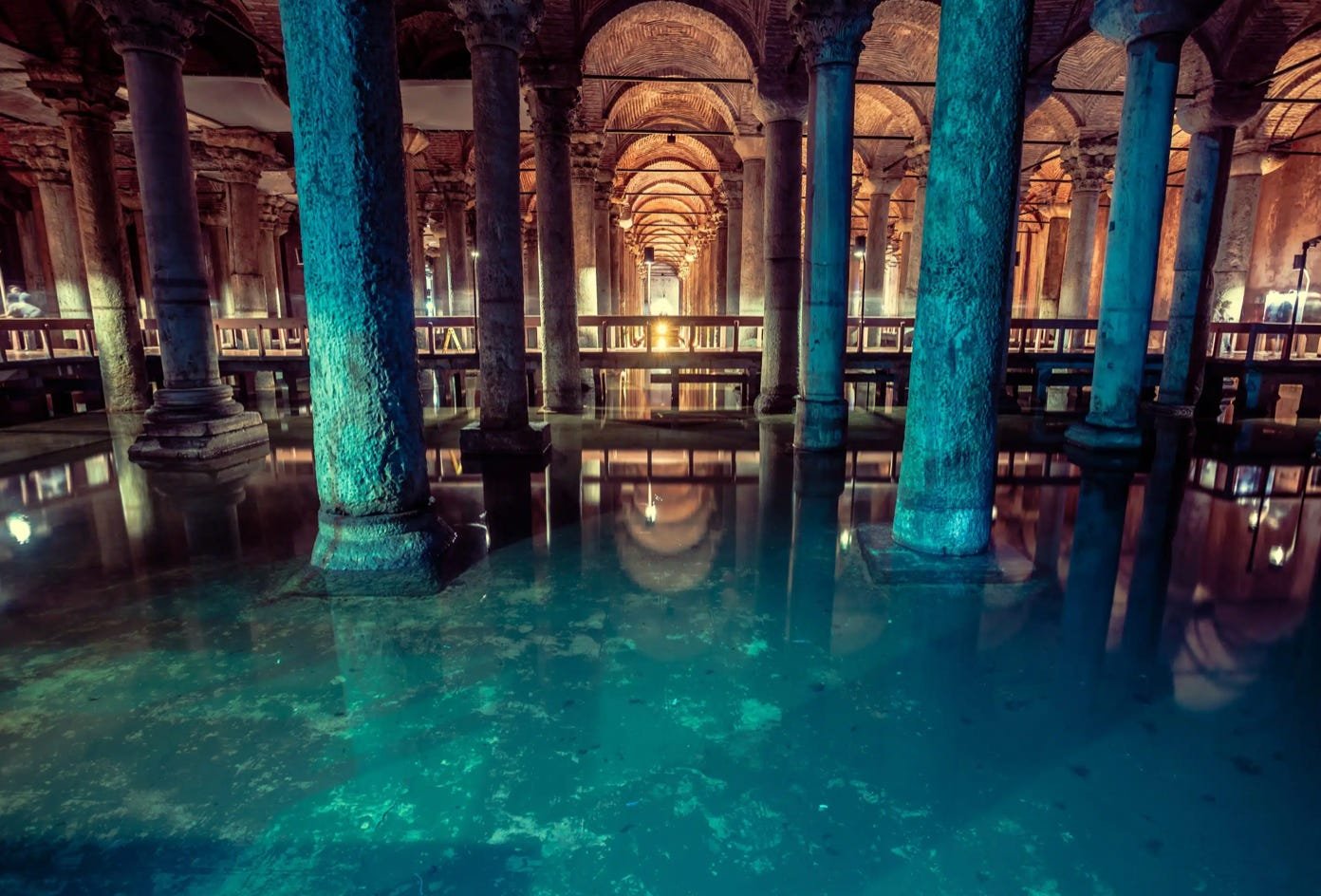
Historic water cisterns, aljibes or aljubs, in Mallorca
It also asks that the materials the buildings are made of be free of chemicals known to harm human or ecological health, that waste be minimized, that recycled materials be used as much as possible, and that they come from as close as feasible; yet another challenge we will face given Mallorca is an island in the middle of the Mediterranean.
But the LBC goes beyond how a building functions technically and what it’s made of, and asks us to build spaces that improve the health and happiness of those who inhabit them by ensuring healthy interiors and prioritizing access to nature. With the equity petal, the LBC pushes us to get closer to a just and equitable world, to ensure that all people can participate, prosper and reach their full potential, by ensuring the buildings are designed to be accessible and inclusive, and to enhance community life beyond the building itself.
And last but certainly not least, the beauty petal asks that a building contribute to the beauty, culture and character of its place, within and beyond its walls. A building shouldn’t just occupy a space or serve a function, it should be an inspiration and show others how to build better. And it should highlight that human beings are part of nature, not separate from it; that we are part of a system that is connected to and depends on all its parts.
Building to the Living Building Challenge standard means we can’t do great things in one part of the system while ignoring the harm we might cause in another. That holistic, systems-level thinking is really what puts “challenge” in its name.
It’s not easy to think through so many issues and options, so many stakeholders, and the impact at all the different levels. Understanding the complexity involved is just one part of it. Coordinating it all also requires a complete change in how we work. It requires working with all the stakeholders from the beginning, so that we’re hearing from all perspectives. It requires choosing partners carefully, whose goals and objectives are aligned with a deeper purpose beyond just short-term profit. And it requires the deep collaboration and trust necessary to find the right solutions for the benefit of the whole system, not just one part of it. Regeneration requires a systems-thinking approach and that is exactly why the LBC is right for what we’re trying to build at Alluma.
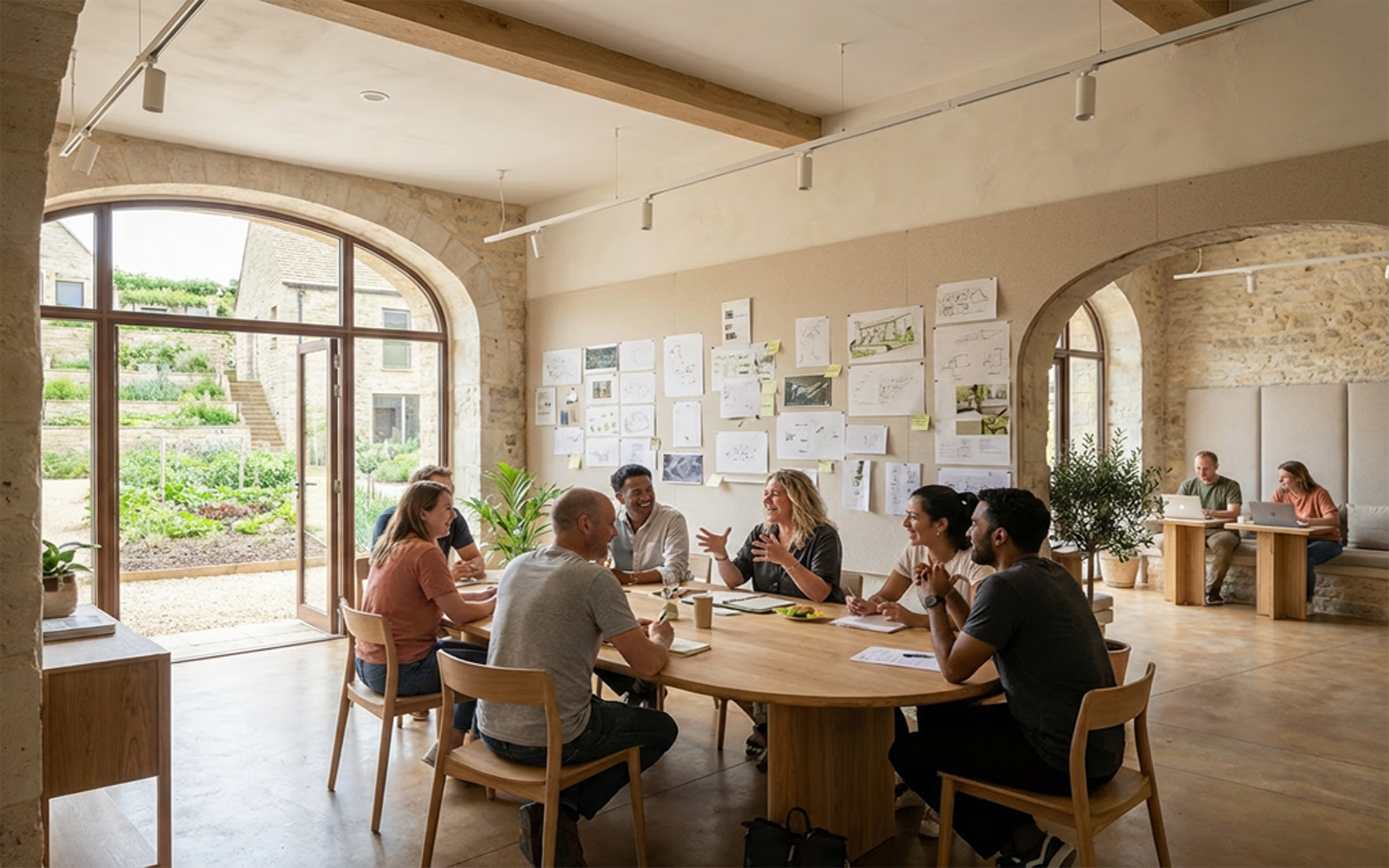
Systemic understanding and collaboration with all stakeholders and partners.
Where Alluma adds a twist
Most regenerative building projects start with the site, and move outward to the buildings, the communities, and then the impact on the ecosystem. We’re starting at the other end, by asking the question of what the current ecosystem is causing and working backward to redesign the business model, the connection to our communities, and finally our buildings and our homes, to create the regenerative, systemic-focused ecosystem we hope for.
That starting point changes everything about what we’re asking of the buildings themselves. Because when we design for the system first, we start to see things that a site and building-first approach can miss.
A right-sized home isn’t just a design choice about square footage. Yes, it requires fewer and healthier materials, less energy to keep it comfortable, and less potable water to function, but more importantly, it’s what it does for the health and wellbeing not just of its residents, but its connection to the community, the biodiversity of the area, and the business of building. In other words, the whole ecosystem.
A communal kitchen that serves a hundred families uses a fraction of the resources that a hundred fully-equipped private kitchens would require. Shared gardens, pool, wellness and creative spaces do the same while also making it easy to enhance our social ties, our health, and biodiversity. Providing residents with the tools to govern themselves, operate and communicate effectively, gives everyone real agency over how their lives are lived. And when we focus on how we integrate with the wider community, and nature, we build the bridges needed to bring others along with us.
When we design for shared abundance rather than private sufficiency, the buildings themselves become more regenerative almost by definition.
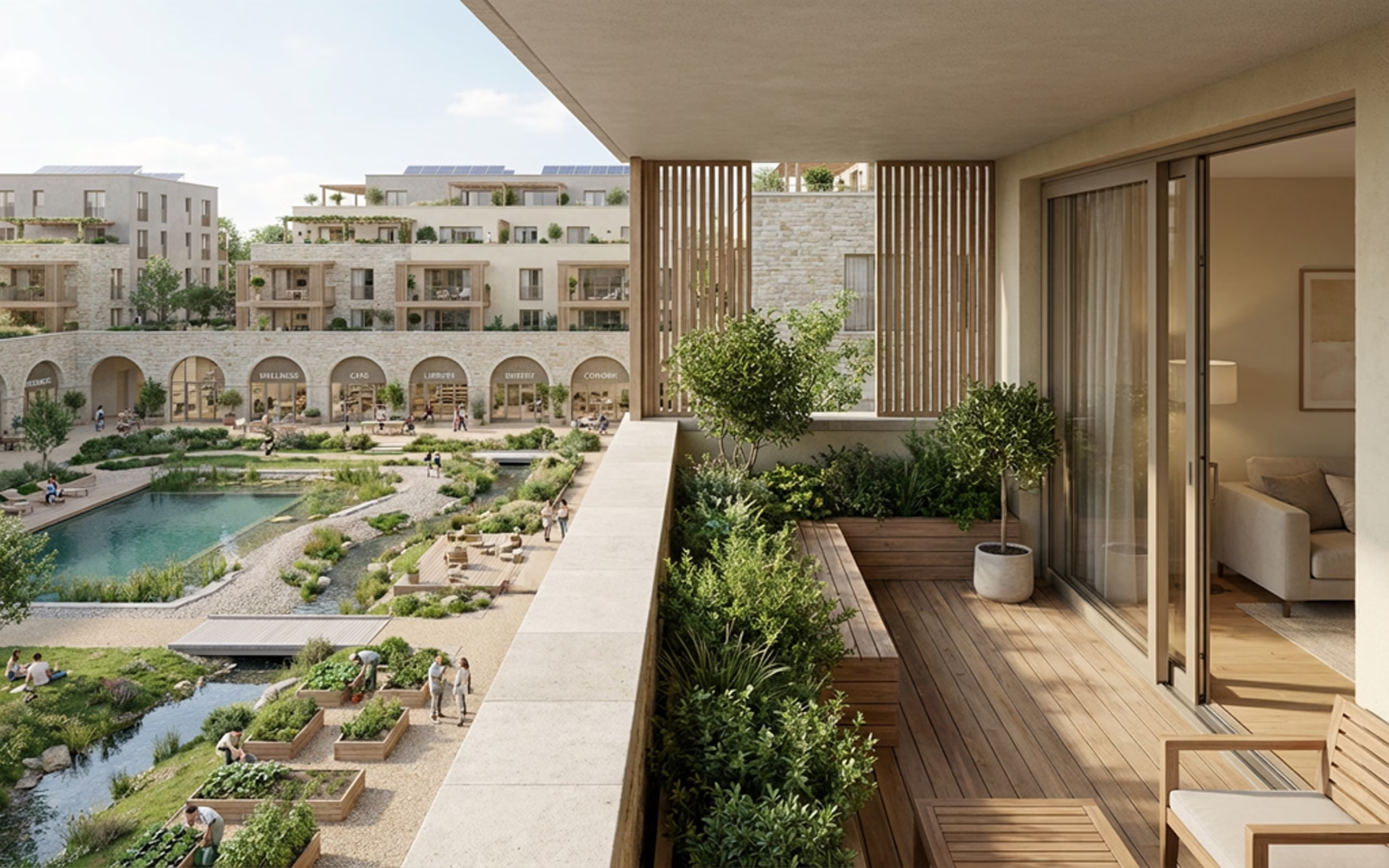
Rendering of Alluma, where we’re designing for shared abundance
Back to Fornalutx
The 400-year-old buildings in Fornalutx, Mallorca, don’t have a standard they were built to or a sustainability plaque in their entryways. They didn’t have a Red List or a certification process or a net-positive energy target. They just had people who understood the land they were building on, the climate they were building in, and the community they were building for. And four centuries later, they’re still standing.
Thanks to the great work of the Living Building Challenge and all those that have paved the way for us so far, we have something they didn’t: the tools, the technology, and the accumulated knowledge to do this deliberately, at scale, and with a rigor that makes it replicable.
What we’re trying to do at Alluma is marry that old instinct with the best of our know-how today.
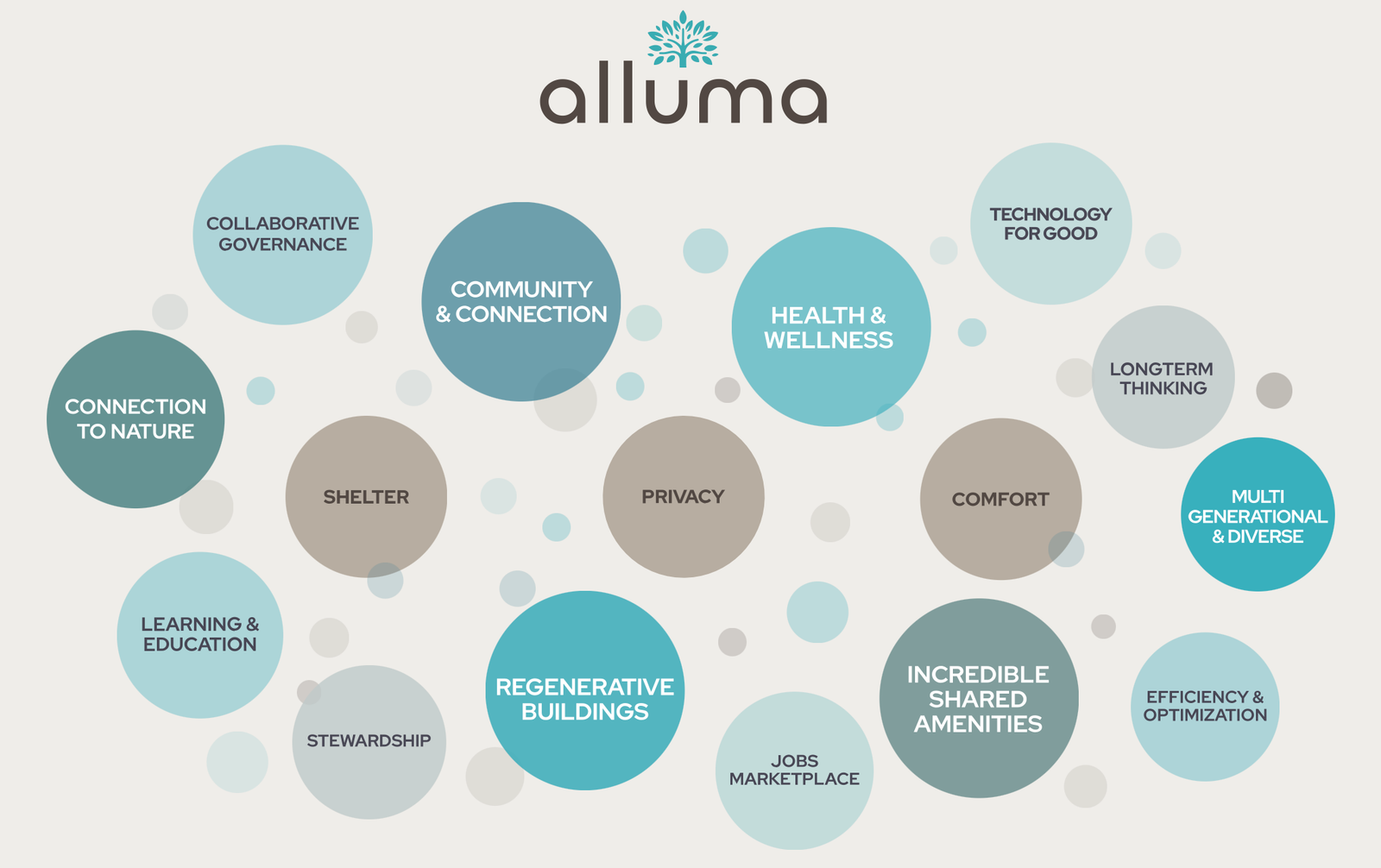
Reimagining what our homes can be at Alluma
Regenerative buildings are the last of the four foundations, and we hope this series has shown that these pillars were never really four separate things. They only work because they’re designed together, each one strengthening the others and each one incomplete without the rest. A community that connects people but houses them in buildings that make them sick has missed something essential. A building that’s regenerative but leaves its residents or communities isolated hasn’t gone far enough.
Now that the foundations are laid, the next part of Alluma’s story is about the business of building. The legal framework, the organization, the partnerships, the financing and business model, and the honest account of what it actually takes to turn an idea like this into something real.
We hope you’ll come along on the journey with us.