
The part of a community we can’t see (but feel)
Good systems don't control people. They set them free.
A few months ago, my 83-year-old father asked me to come to his building owners’ meeting with him, so I went.
The meeting was held standing up in the entryway of the building. There were no chairs, no water, and no formal agenda. Half the residents in the room were elderly. After about 30 minutes, I noticed that the people who were most uncomfortable, the ones whose backs were hurting or who were tired of standing, had started to get impatient. And when people get impatient, they get loud, or give up talking, hoping the meeting will end faster.
Two newer owners who didn’t want to make waves went along with whatever was being proposed. My father raised an observation, a genuinely good one I thought. But in everyone’s impatience, it got shut down. He looked at me afterward. It’s not worth it, he said.
The problem with this meeting wasn’t the neighbors, because most of them had good intentions. The problem was the conditions.
Nobody had thought through what it actually takes to make a good decision together as a community, such as the space, the structure, the basic human comfort that allows people to think clearly and listen generously. This owner’s meeting had set everyone up to fail before a single word was spoken, and when systems fail quietly like that, they become inefficient, unfair and dominated by those with the loudest voice. But it’s the more insidious result -the robbing people of their interest and willingness to participate in and contribute to their community-, that hurts the community the most.
This meeting has stuck with me and has helped inform one of Alluma’s key foundations, Systems and Technology for Good.
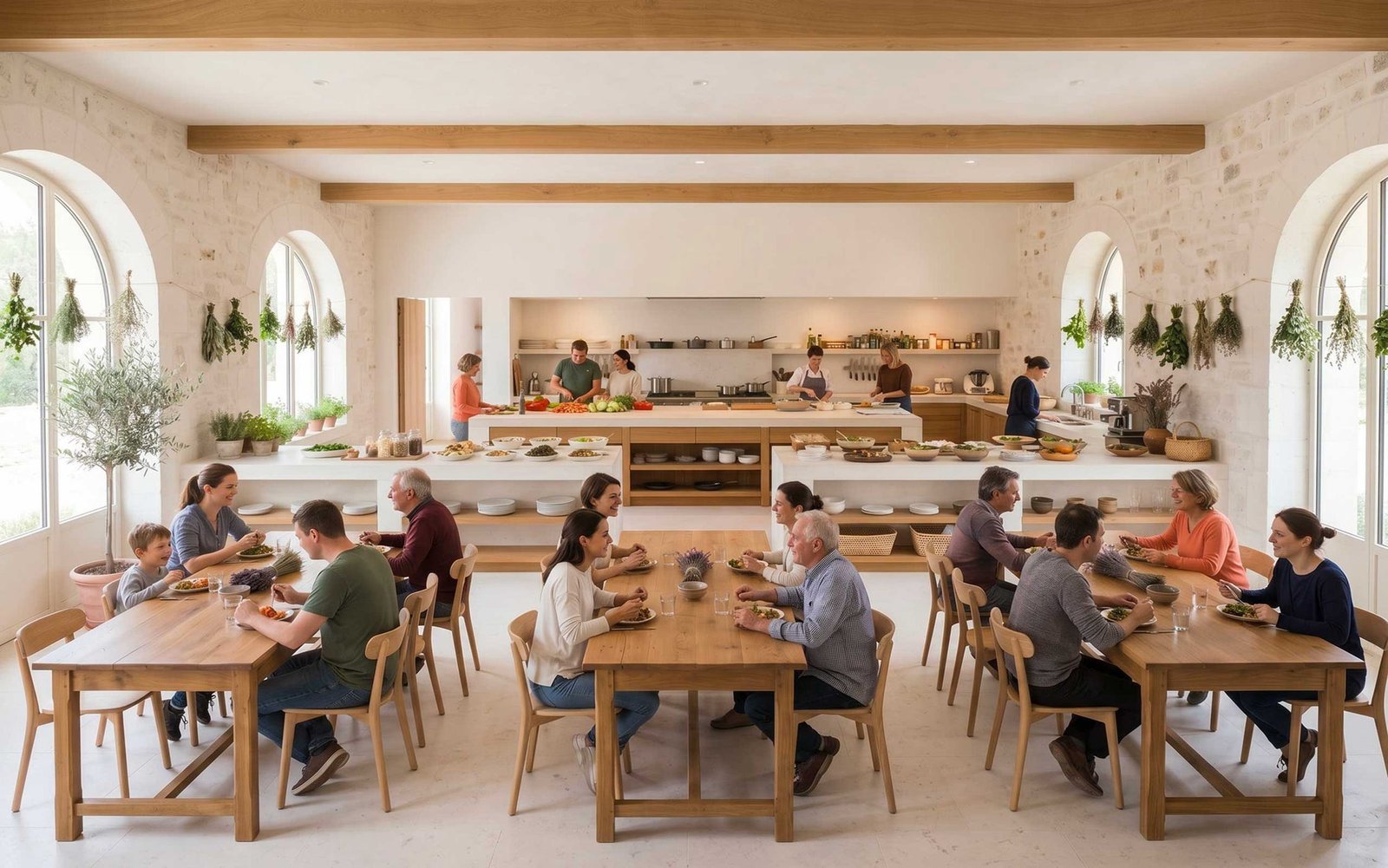
In our first foundations essay, we explored Community and Connection, and why -as part of reimagining what our homes can be- we need to redesign our homes and communal amenities to help restore our connection to each other and to nature.
In this essay we go deep into another foundation and the systems that determine whether a community actually holds together over time. Governance. Participation. Technology. The things you can’t photograph but feel in every interaction.
When the structure fails, the people do too
When most of us think about how a residential community governs itself, we tend to picture a version of the same thing: an elected board, a set of rules, a majority vote. Like an HOA (home owners’ association) or co-op board. The idea behind these structures is actually a good one. Residents elect people who represent the community, give them a mandate, let them make decisions on everyone’s behalf.
But in practice, what tends to happen is that the people willing to take on those roles are not always representative of the whole. Decisions get made impatiently, in rooms that not everyone feels welcome in. When things get complicated — a conflict between neighbors, a costly repair, a disagreement about how shared spaces should be used — the process defaults to whoever speaks with the most confidence or has held the role the longest. Resentments and division grow. The people who voice alternatives are dismissed because it will take too long, and, eventually, stop showing up.
But the issue isn’t generally the people; it’s the structure. These often thankless, unpaid positions lead to a top-down, majority-rules system that eventually produces the same results: a few people making decisions for everyone else, divisiveness, and everyone else gradually disengaging. The more power that’s concentrated at the top, the more this vicious cycle continues.
As we’re creating Alluma, I knew the community would need a different, better structure that would be better in practice for real people with real differences trying to share a life together.
There are communities out there that are deeply regenerative, beautifully health-focused, or genuinely community-centered. But very few have thought carefully about the systems that hold all of that together. This is what I believe makes Alluma different, and it starts with how we govern.
Sociocracy: a different way to decide together
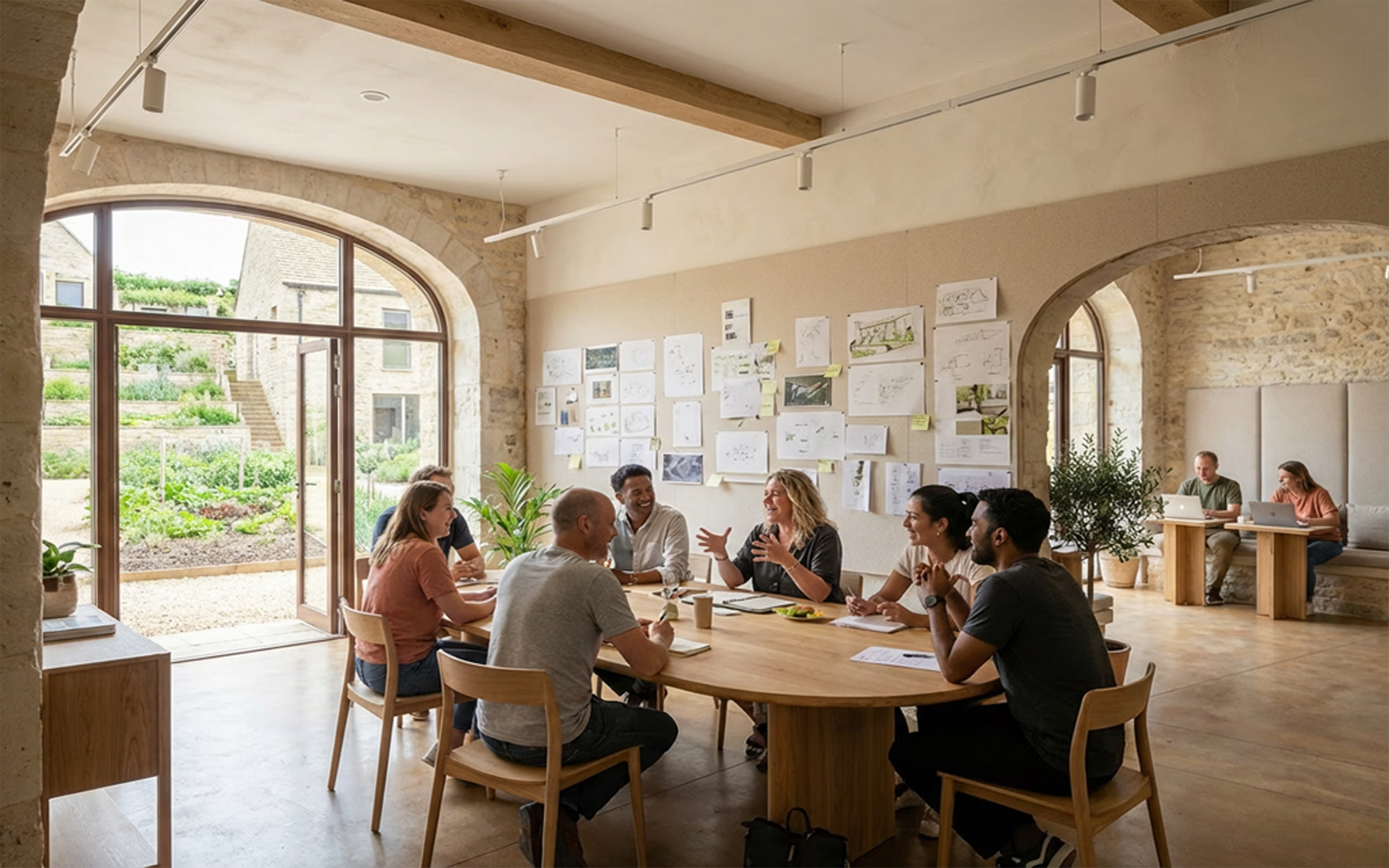
Alluma’s governance model is called sociocracy. It’s a technical name for a simple idea: the people who live with the consequences of a decision get a real voice in making it.
Rather than a board making decisions for everyone, sociocracy organizes a community into interconnected circles. Each circle is responsible for a specific area of community life like maintenance, finances, community relations, programming and events. Each circle has a few interested members and a clearly defined scope. And, this part is important, a liaison member who connects it to the wider structure, so no circle operates in silos, and at all times, everyone knows what’s going on.
At the center sits a general operating circle that ties all the others together. Above that, an advisory circle holds the broader strategy and mission for all of Alluma’s communities. It sounds more complex written out than it is in practice. What it means, concretely, is that every area of community life has a dedicated group of people who care about it, are accountable for it, and have the authority to make decisions about it — without having to wait for a board meeting or a majority vote.
But the part I find most interesting, and that I think changes everything, is that sociocracy is a consent-based system, meaning decisions don’t require everyone to agree. They simply require that no one objects.
This distinction matters more than it might seem at first. Consensus asks everyone to reach the same conclusion. That’s often impossible and tends to produce compromises that nobody is truly happy with. Consent asks something different: can we live with this? Do we have a remaining objection that hasn’t been addressed?
When someone does object, the process doesn’t shut them down. It slows down to listen and understand them. What’s the concern? What would need to change? Then the proposal gets modified until it reaches a version that everyone can genuinely consent to. Objections are always recorded, so no voice disappears.
Here’s an example. Imagine a circle is deciding whether to repaint the exterior of a shared building. The initial proposal is to repaint the whole structure in a new color. Someone objects — they’re not sure about how the color affects the aesthetics of the rest of the community. Rather than outvoting them, the circle narrows the proposal. What if we paint just one wall or section first, see how it looks overall and at different times of day, and revisit the decision next month?
Everyone consents to that. They paint the wall. They see if they like it. And then, with real information and real experience, they decide together what to do next.
It can take more time upfront to make sure no voice is dismissed, but it leads to better long-term decisions, fewer mistakes, and a community where people actually trust the process enough to keep participating.
Of course, life in a community is bound to bring up bigger issues than deciding a paint color. But it’s especially in these situations that sociocracy shines. The process ensures that differences are addressed fast, equitably, creatively, and thoroughly, instead of being silenced, bulldozed, or ignored. All before situations generate feelings of frustration, anger or division.
These same principles — consent over control, purpose over hierarchy — don’t just govern life inside an Alluma community. They shape how Alluma itself is structured at every level. That’s a bigger conversation, and one worth its own essay later.
Alluma is reimagining how we build and live,
and here on Substack we’re describing our
journey of building a regenerative community
in Mallorca — the decisions, the discoveries,
and what it actually takes to build better.
The Community Jobs Marketplace: where systems meet daily life
Governance shapes how we decide together, and that also manifests in how we show up for each other every day. We introduced the community jobs marketplace briefly in the first essay, but it deserves more space here because it’s really the place where the systems of this foundation become personal.
I first started to think about this concept when I realized that building a community with a lot of amenities, together with the cost of maintaining and operating those shared spaces and services, would add up pretty fast. There’s a reason why modern buildings and communities that offer amenities, are not affordable for most people. But people have more to contribute to a community than money. They have time, skills, ideas, strengths, and passions. So why not use and recognize them as real forms of contribution? If we give residents the choice to use the assets they have to offer, we not only make the community more affordable and inclusive, we provide a platform that gives people agency, a say in how to meaningfully participate in their own lives. If the job needs to get done by someone, who better than someone who has an interest and active stake in how it’s performed?
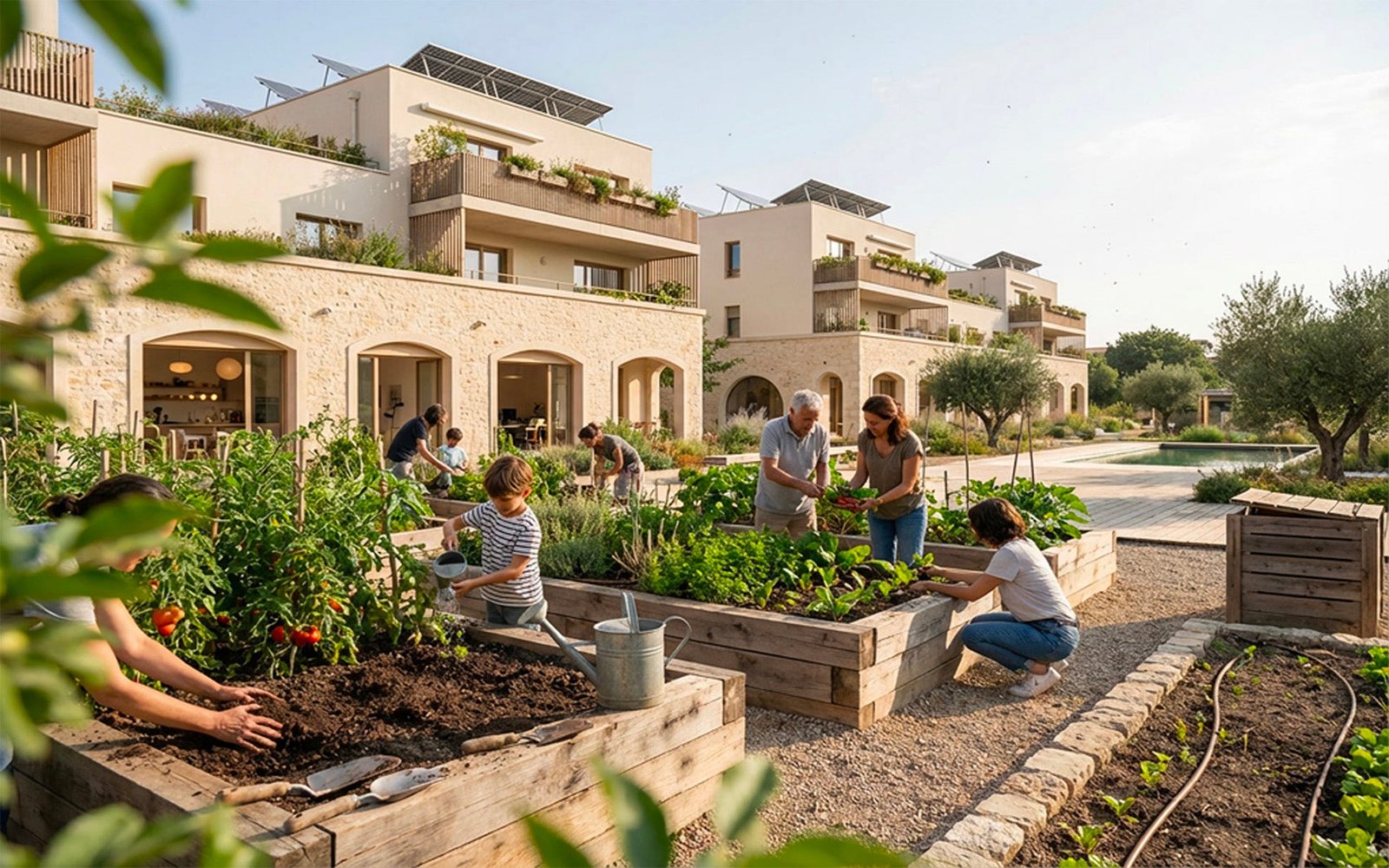
So, in an Alluma community, residents who want to reduce their monthly community expenses can do so by taking on roles in the community, such as managing the gardens, helping care for the beehives, running events, cooking in the communal kitchen, teaching a skill to neighbors who want to learn it. The passionate gardener who wants to tend the vegetable beds part-time. The retired teacher who wants to offer art lessons on Tuesday afternoons. The tech expert who wants to manage the building systems. The extrovert who comes alive organizing the special event.
And because it’s the residents who decide what amenities they want for the community, it’s pretty easy to estimate what the roles, costs and community fees will be for everyone. From there, each family can figure out how to best contribute to the community. Those who have the interest, skill, and time can contribute by filling either a one-off, part-time, or full-time job at an agreed time and rate, which in turn reduces their monthly community fee. Others may contribute only with their fees. While the majority, we assume, would likely contribute a mix.
The result: the services and costs needed to operate the amenities and needs of the community, are covered by a mix of both the jobs filled by the residents and the community fees paid. And when the jobs or roles can’t be filled by the community’s residents, whether due to a lack of specific skill or need, they can always be filled by hiring outside the community. This helps the system become flexible, personal, and adaptable over time as residents’ and the community’s needs change.
Because what makes someone a valued part of a community is never only about what they can pay. It’s about what they’re willing to bring.
Technology in service of connection, never instead of it

Governance and contribution are two of the systems that hold a community together. The third is technology as the infrastructure that makes everything else run smoothly.
Communication platforms that keep circles connected. Digital tools that let the whole community weigh in quickly on a question before it goes to more formal decision-making. Tools that make participation in the jobs marketplace easy to track and manage. Systems that teach, monitor and optimize how the regenerative buildings operate, including energy use and efficiency, indoor air quality, light controls, waste, water and soil systems, and so much more. A little nerdy? Maybe. But when we measure, we can analyze and learn, and that’s what moves us a little closer every day to improving the system.
But it’s not just about efficiency and optimization. The measure of success for all of it is always the same question: does this help make connection to each other and to nature easier, or does it replace it?
Our commitment at Alluma is that our systems and technology will increase awareness, health, and comfort, and enhance community life but never at the expense of connection. In a world where our devices have quietly become the primary way we relate to each other, that’s not a small thing to say. It’s a design principle that has to be actively chosen, and actively protected.
Back to the entryway
Imagine the same neighbors from my father’s residents’ meeting. But this time there are chairs, so no one is uncomfortable standing. There’s water and a snack on the table. Someone has thought through the agenda in advance. Each person speaks in turn. When my father raises his observation, it gets discussed. Someone asks what’s behind the concern. The proposal gets adjusted. He consents, even if it wasn’t his first choice, because his voice and the discussion genuinely changed the outcome.
The people in that room did not change. The conditions did.
That is what well-designed systems do. They don’t override human nature. They create the conditions for the best of us to show up. And that’s why this foundation — Systems and Technology for Good — is lived rather than seen and may be the one that truly holds everything else together.
Because good design can bring people together, but only good systems can keep them there.
This is the second in our series on the foundations of Alluma. You can read the first essay on Community and Connection here.