
Decision-making in communities is fraught with complexity.
Imagining an ideal alternative of what it could actually look and feel like might help us improve our processes.
This is how we're imagining it at Alluma.
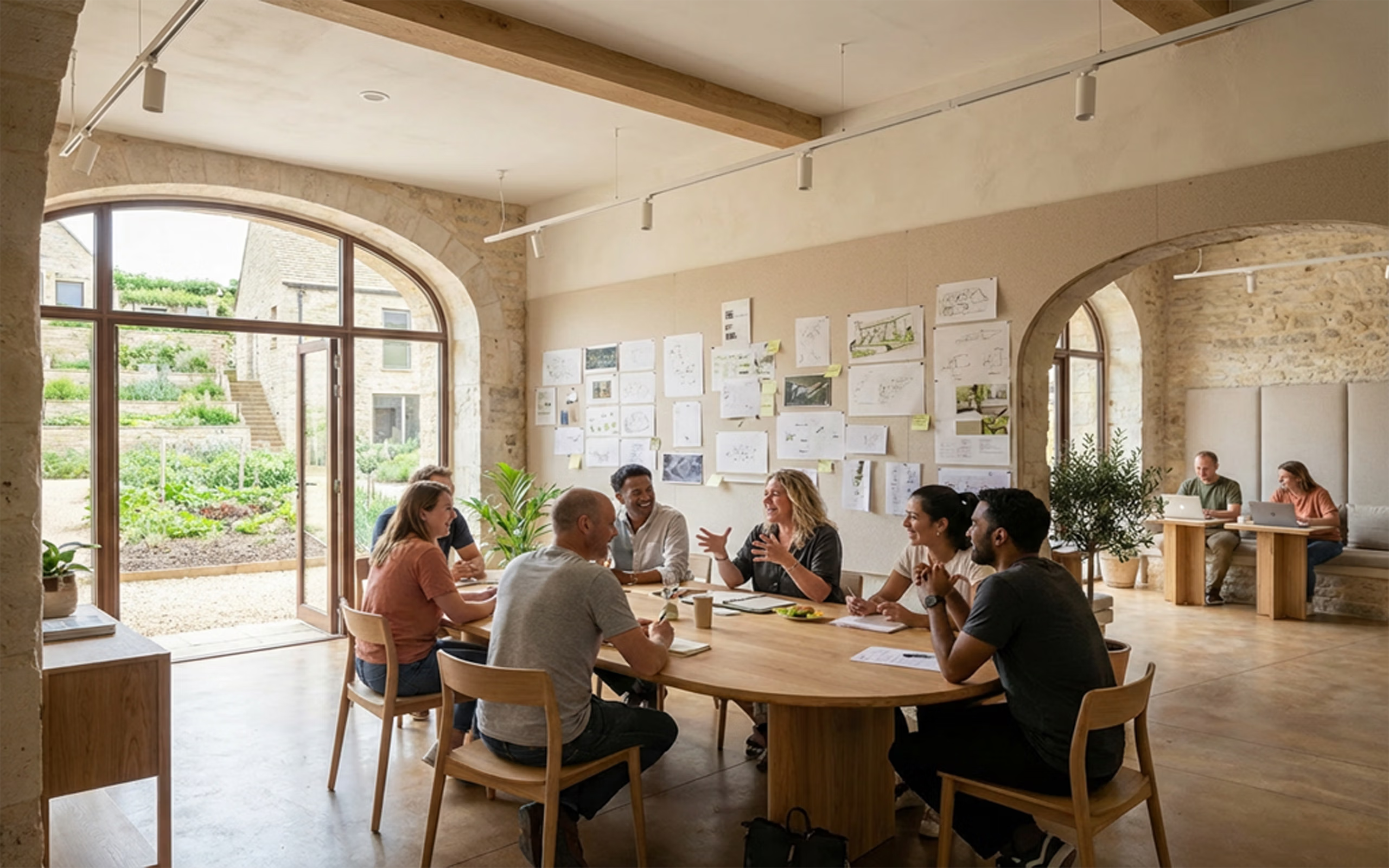
We start by thinking about the space. Comfortable chairs and an oval table, well-sized for conversation. Water and light snacks on the table. The meeting’s agenda sent out last week. The room, well-ventilated, well-lit, with good sound insulation, and at a comfortable temperature. The space, set up with tools that help organize and clarify ideas and goals, clear of visual distractions. The space designed with natural materials and biophilic strategies that help us feel grounded, safe, and calm.
Each one of these design choices has an impact on how well we set people up to make the best decisions. Each element helps with focus and improves productivity. They eliminate physical discomforts or mental strain. They provide oxygen, energy, and hydration. The agenda sets a limit that respects everyone's time, and sending it ahead allows everyone to prepare in their own way.
All of these elements help us, consciously or not, to feel taken care of. Someone had to think about each one of these details, and while we might not always be aware of why, we definitely feel when a space feels right for the purpose at hand, and when it doesn't.
The way a community thinks about its purpose and its people makes all the difference.
Personally, I process deeply but slowly. I like to think through things from different perspectives, and this takes time. When I'm given the time to prepare, I know I can add more value than when I have to think fast. Others may not need the time, but might need something else instead. Perhaps a visual representation of the issue, or a written summary, or data to validate. So, when we aim to encourage and value everyone's input, we must have systems that think about how different people understand issues and can contribute at their best.
In an ideal scenario then, a community would function as a constant feedback loop. Members of the community would feel safe enough to express what they need in order to show up at their best, and the community would respond in ways that take those requests into account.
Well-designed systems, whether physical, procedural, or otherwise, are not there to limit or change people. They create the space and opportunity for everyone to show up at their best.