
Welcome to Alluma
Designing our homes and communities differently.
Hey there!
Welcome to Alluma. A newsletter about designing and building our homes and communities differently — healthy, connected, resilient — from inside the making of a regenerative community in Mallorca.
I write about the design choices that shape whether we connect or isolate, how buildings can give back more than they take, and what becomes possible when every stakeholder in how we build — from residents to planet — has a seat at the table.
We’ve been told for decades that we have to choose. Comfort or sustainability. Privacy or community. Profit or purpose. I don’t believe those are real trade-offs. I believe they’re design failures — and we’re building something to prove it.
If you’ve ever spent time in a space and felt uncomfortable or tired, or you’ve walked through a neighborhood and felt something was missing, or feel like there must be better solutions out there, you’re in the right place.
Who Is This For?
Alluma is for anyone who’s started questioning how we live — and wondering if we could design it better.
People rethinking home. You might be an architect, a designer, a developer, or an urban planner who knows the current model is broken. Or you might just be someone who’s tired of living next to neighbors you don’t know in buildings that weren’t designed for connection. If you believe homes should do more than provide shelter — that they should help us feel healthier, more connected, and more alive — this is for you.
People who care about the planet but aren’t willing to sacrifice comfort to prove it. You’re sustainability-minded, but not interested in giving up modern life to live responsibly. You want to know if it’s possible to have both genuine comfort and genuine environmental accountability. It is, and we’re building the proof.
People fascinated by how systems work and impact our lives. Not just buildings but the whole business of building. How do we create a better system, where developers, governments, suppliers, residents and communities stop working in silos and start working together, aligned as partners? If that question excites you more than it overwhelms you, we’re going to get along well.
People looking for balance. Between individuality and community. Between preserving what works from the past and using knowledge, innovation and technology to design for the future. Between moving fast and moving thoughtfully. If you feel the pull of both sides and refuse to choose, that’s exactly the tension I write about.
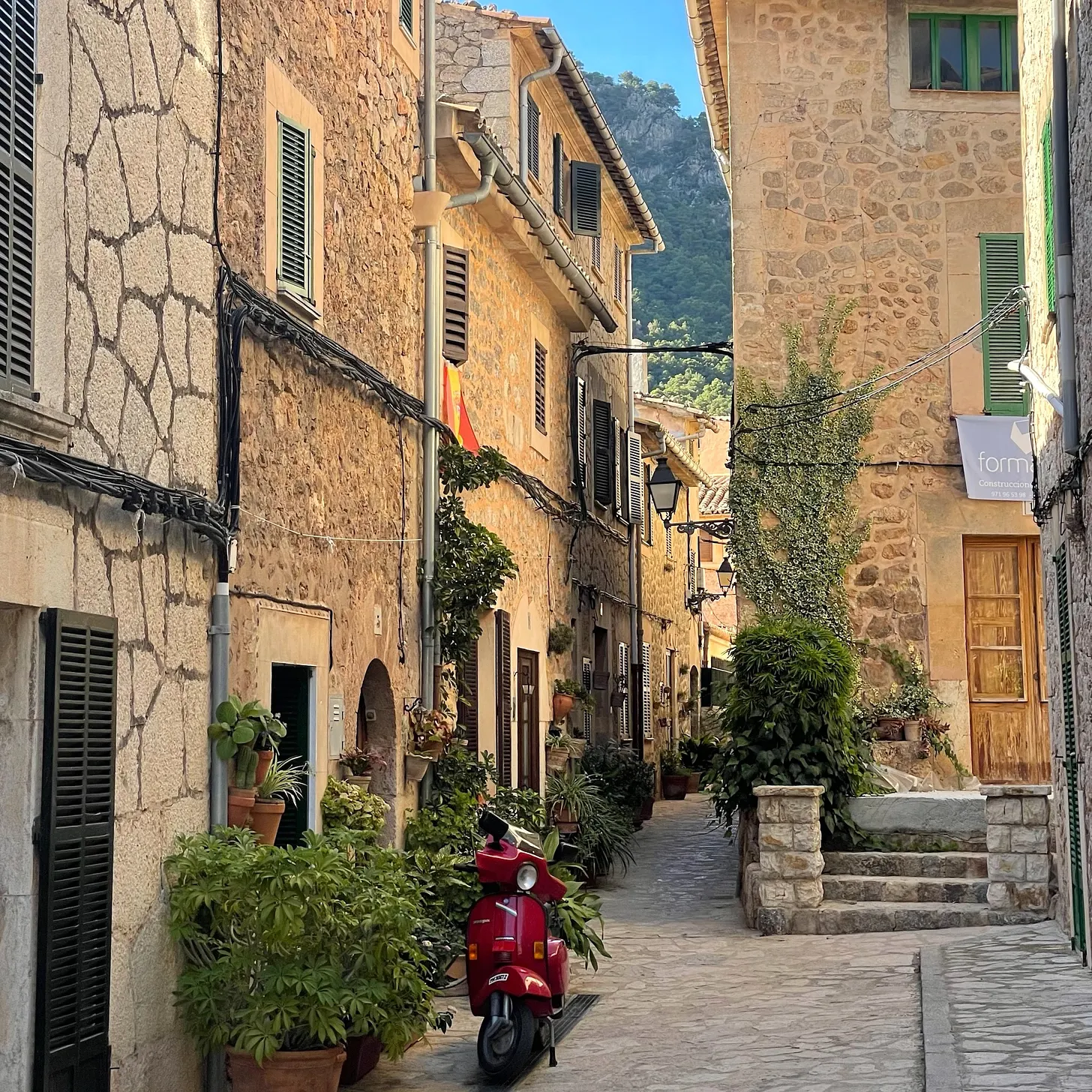
Village life - Valldemossa, Mallorca
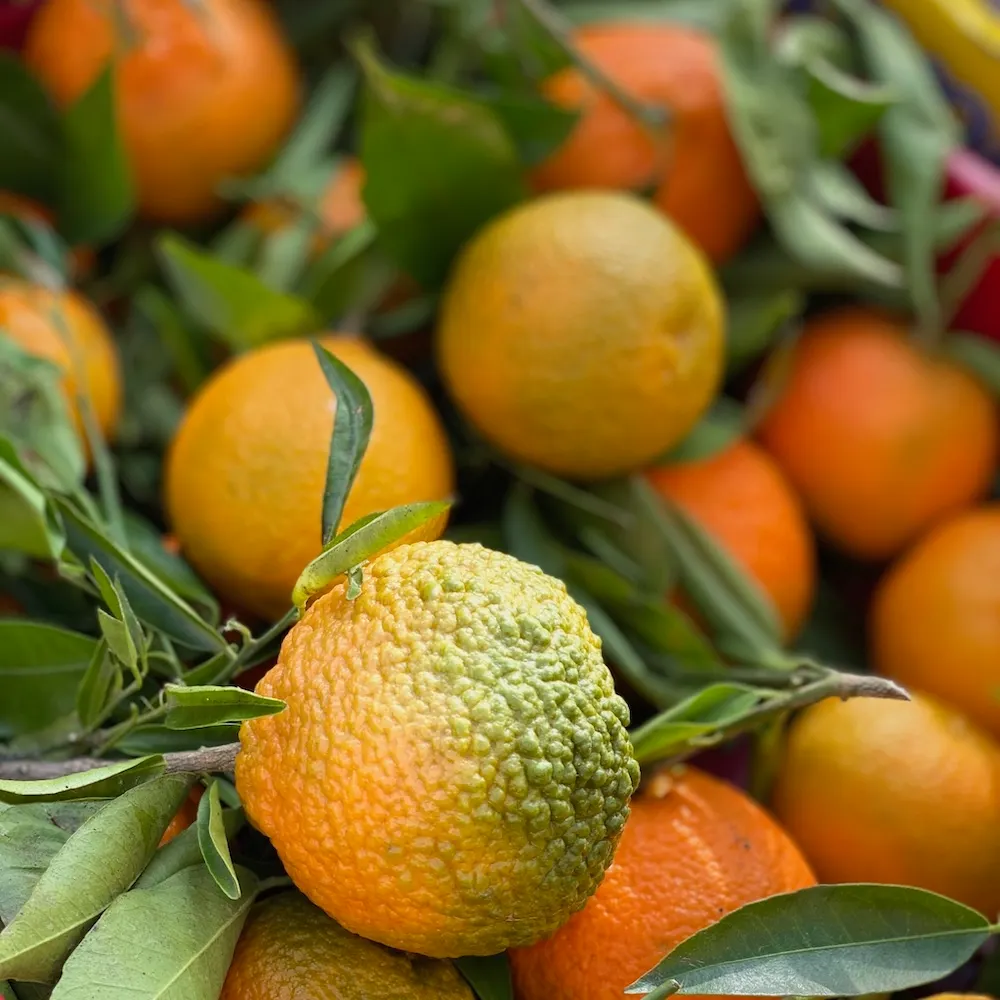
Fresh, local, seasonal produce as a connection to Place
The Problems That Keep Me Up at Night
I started Alluma because I kept running into the same problems — in my own life, in the buildings I lived in, in the cities and villages I moved between. And when I looked closer, I realized they were all connected.
We designed isolation into our homes and didn’t notice. We optimized for efficiency, privacy, and independence. Each decision made sense on its own. But nobody stopped to ask what we were losing. The result is buildings full of people who don’t know each other, and neighborhoods where connection requires heroic effort instead of being built in.
Our buildings are quietly making us sick. Toxic materials, poor air quality, endocrine disruptors, microplastics — most people have no idea what’s in the air and the materials of their homes, or how they’re affecting their health. We spend most of our lives indoors, in buildings that were never designed with our health and wellbeing in mind.
We confused “sustainable” with “good enough.” A building can be energy-efficient and still isolate people. It can be certified green and still be built with materials that cause harm. We’ve been settling for “less harm” when we should be designing for regeneration — buildings that actively heal instead of just reducing damage.
The business of building is broken. Developers, banks, and housing authorities set the terms. Architects and contractors execute. Residents get what they’re given. Everyone works in their own silo, optimizing their own piece, with no one designing the whole system. The result: homes that are profitable to build but damaging to people and planet.
We build without understanding place. The same buildings get built everywhere, with materials shipped from anywhere, without any understanding of the climate, the culture, or the land. Modern developments that could be located in any city on earth — and belong to none of them.
We think long-term but build short-term. Financial markets run on quarterly reports. Government cycles last 2-6 years. But buildings stand for decades, sometimes centuries, most often without considering the now fast-changing climate. And the impact on future generations and our planet is even longer. It’s absolutely possible to design with resiliency and a much longer timeframe in mind, but only if we prioritize it.
Community is left entirely to chance. We build homes and hope community happens. We throw a party in the lobby once a year and call it connection. It almost never works — because connection happens through regular, everyday moments and interactions, and it builds over time. And without connection, we stop caring about each other and our environments.
These aren’t separate problems. They’re all symptoms of the same broken system, and that’s what Alluma is trying to fix.
What You’ll Get Here
Every couple of weeks, I hope to publish one essay. That’s it. No link roundups, no news digests, no five-step frameworks.
Each essay explores one idea — grounded in real stories and observation, not theory or jargon. Here’s what you can expect:
Stories from Mallorca and New York. I split my time between both places, and the contrast teaches me something new constantly. A bakery in Mallorca where the “inefficiency” of a real conversation is the whole point. A New York building that rejected an opt-in neighbor directory for privacy reasons. My dad’s Wednesday lunch that he never misses. The balance between vibrant and calm energy. These observations are the foundation of everything I write.
The making of a regenerative community — in real time. We’re building Alluma, a regenerative community in Mallorca designed to the Living Building Challenge — the world’s most rigorous green building standard. I share what we’re learning, what’s harder than expected, what’s working, and what we’re still figuring out.
Ideas across four foundations. Everything I write connects back to how these four things work together as a system — because in a regenerative community, they have to:

The journey to designing life differently has started
- Community & connection — designing for belonging, not hoping for it. Multigenerational, diverse communities with shared amenities that naturally bring people together — from communal kitchens and laundry rooms to natural swimming pools and co-working spaces.
- Health & wellbeing — homes built with non-toxic materials, clean air, natural light, sound and thermal comfort, and spaces designed to improve how we feel physically and emotionally. Right-sized private homes balanced with extraordinary shared spaces.
- Regenerative buildings — built to the Living Building Challenge standard. Net-positive energy. Non-toxic, local, recycled, reusable materials. Water systems that work within the balance of the land. Improving biodiversity and restoring a healthy relationship with place. Designed to support a just and equitable world. Buildings that give back more than they take.
- Systems & technology for good — governance built on stewardship and sociocracy. Technology that enhances communication and efficiency without replacing real connection. An optional community jobs marketplace where residents can contribute what they love doing and share in the care of the community.
The business of building differently. Not only are we reimagining our homes and communities, we’re also reimagining the business of building. Because without changing the system, we’ll never change the results. A steward ownership model whose main purpose is to build homes and communities that improve the health and wellbeing of people and planet. By including all stakeholders from inception and aligning our values and mission long-term, we aim to create a long-lasting ecosystem that generates profits equitable for all. This is new and complex, but we’re excited for the challenge.
The questions we’re working through. We don’t have all the answers. Some essays will share what we’ve figured out. Others will share what we haven’t. This is a conversation, not a lecture — and I’d love your perspectives along the way.

Me, Samantha Newman
Who Am I?
Every couple of weeks, I hope to publish one essay. That’s it. No link roundups, no news digests, no five-step frameworks.
Each essay explores one idea — grounded in real stories and observation, not theory or jargon. Here’s what you can expect:
Stories from Mallorca and New York. I split my time between both places, and the contrast teaches me something new constantly. A bakery in Mallorca where the “inefficiency” of a real conversation is the whole point. A New York building that rejected an opt-in neighbor directory for privacy reasons. My dad’s Wednesday lunch that he never misses. The balance between vibrant and calm energy. These observations are the foundation of everything I write.
The making of a regenerative community — in real time. We’re building Alluma, a regenerative community in Mallorca designed to the Living Building Challenge — the world’s most rigorous green building standard. I share what we’re learning, what’s harder than expected, what’s working, and what we’re still figuring out.
I love food, learning, and photographing smiles, plants and landscapes. I’m curious and love to understand how things work and why people do and think the things they do. I love sunlight, cold plunges and walking. I’m an introvert, but push myself outside my comfort zone when needed. I’m an optimist and laugh easily. And I love being in nature.
A few years ago, I started spending more time in Mallorca with my parents, and I started really noticing things. The rhythms of village life that make connection effortless. The old stone buildings that belong to their landscape because they were built from it. The contrast with New York, where I’ve lived next to neighbors for years without us really knowing each other.
I kept asking the same question: what if we could design spaces where connection was built in? Where we didn’t have to be brave just to know the people we live next to? Where the buildings themselves help heal the planet instead of harming it?
Those questions became Alluma.
I’m supported by a small team I’m grateful for: MK McGowan (storyteller & strategist), Carolyn Fell (visual designer & food explorer), Alexa Newman (researcher & flower lover), and Michelle Strohl (researcher & curious thinker), as well as the many friends and mentors who have guided me so far. We’re building the team as we build the community — and if this work resonates with you, we’d love to hear from you.
What’s Next?
If any of this resonates, here’s how to stay connected:
Subscribe — A new essay lands in your inbox every couple of weeks. Free. No spam.
Visit Alluma — Learn more about the regenerative community we’re building in Mallorca at alluma.life
Join the Alliance of Partners — We’re reimagining the business of building. If you’re an architect, contractor, supplier, investor, government liaison, NGO, or someone with skills and passion who wants to help build something different, we’d love to talk.
Every relationship begins with a conversation. Welcome to ours.
— Samantha

The journey to designing life differently has started